• Work Overview
  • About
  • Partnerships
  • Testimonials
  • On The Record
  • Linkedin

Vicky Elmer

(nee Beercock) | VP-Level Global Communications & Marketing Leader | Brand, Culture, Reputation

  • Work Overview
  • About
  • Partnerships
  • Testimonials
  • On The Record
  • Linkedin

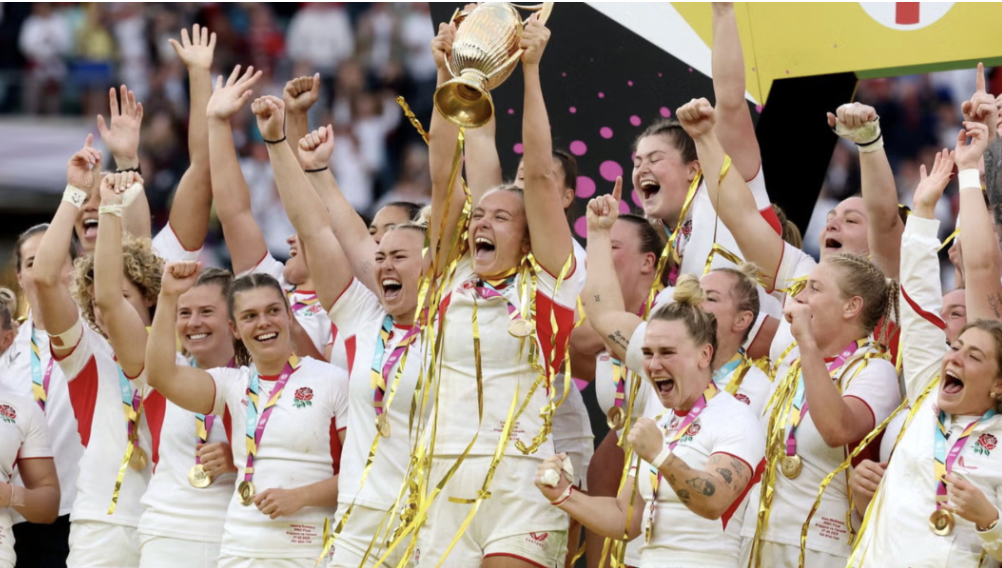
🔥 London’s Turn: Women’s Champions Cup Brings Global Spotlight to the Capital

FIFA’s new Women’s Champions Cup will make its debut in London early next year - a landmark moment signalling how far women’s football has come in global stature and commercial weight. From 28 January to 1 February 2026, the city will host the semi-finals, third-place play-off and final, uniting continental champions from Europe, Asia, Africa, Oceania, and the Americas in a format mirroring the men’s Club World Cup.

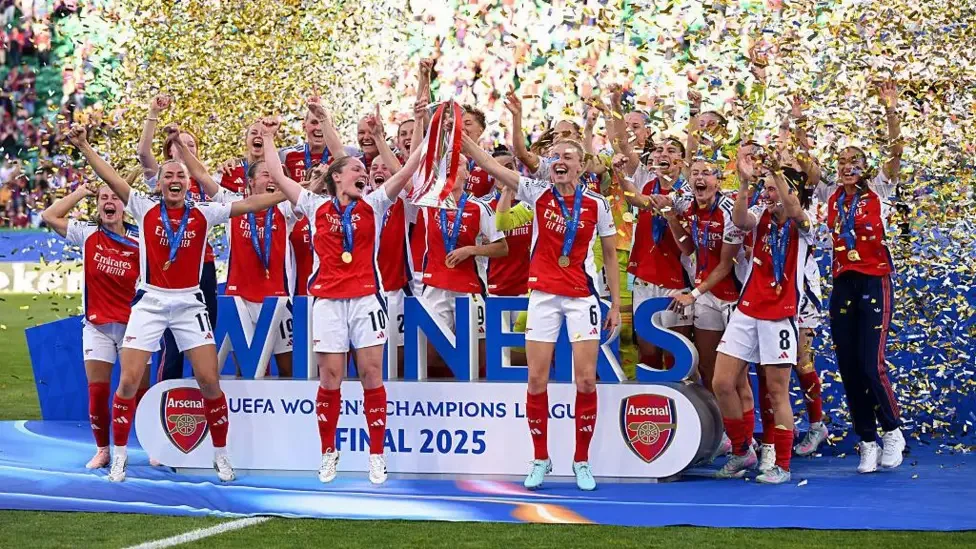
For Arsenal, Europe’s representative and reigning Women’s Champions League winners, it’s another high-profile chance to build global fandom - and for the capital, a statement that women’s sport now commands prime real estate in world football’s calendar.

📊 Supporting Stats:

The Women’s Champions League final drew over 50,000 fans last season at San Mamés, setting a new benchmark for continental women’s football attendance (UEFA, 2025).

The global women’s football market is projected to hit $1.3 billion by 2030, up from $660 million in 2023 (FIFA Benchmarking Report).

England’s Women’s Super League continues to grow, with average attendance up 34% YoY, and Arsenal averaging over 25,000 fans per match at the Emirates (FA data, 2025).

Strategically, this is a smart and symbolic move. FIFA’s decision to bring the inaugural Women’s Champions Cup to London - arguably the epicentre of the women’s club game - gives the tournament immediate legitimacy and visibility. For Arsenal, it’s another opportunity to cement their global status beyond Europe, especially against American, Asian and South American champions.

However, fixture congestion looms large. With the Women’s African Cup of Nations overlapping WSL fixtures, club-country tensions could rise - a recurring problem that women’s football governance hasn’t yet solved. Still, as a global showcase, the tournament could redefine the off-season narrative for women’s sport, turning January into a premium window for elite competition and brand partnerships.

📌 Key Takeouts:

What happened: FIFA launches the first-ever Women’s Champions Cup, to be hosted in London (28 Jan–1 Feb 2026).

Who’s involved: Arsenal (Europe), NJ/NY Gotham (North America), and continental champions from Asia, Africa, Oceania, and South America.

What worked: A global stage for women’s club football, centralised in a major market with built-in fanbase and media power.

What didn’t: Potential scheduling clashes with WSL and international tournaments risk diluting club momentum.

Why it matters: Marks women’s football’s transition from regional growth to a globally unified commercial ecosystem.

🔮 What We Can Expect Next:

Expect this to become women’s football’s equivalent of the Club World Cup, with bigger sponsors, global media rights, and perhaps even a rotation between continents. If London delivers commercially and atmospherically, it could pave the way for FIFA to establish a new global broadcast tentpole outside the World Cup cycle.

And for Arsenal - the team that’s already built one of the sport’s most loyal and marketable fanbases - this could be the moment they go from European powerhouse to global cultural export.
categories: Impact, Sport
Friday 10.10.25
Posted by Vicky Beercock
 

On The Record Linkedin Newsletter: 6th October 2025

Monday 10.06.25
Posted by Vicky Beercock
 

On The Record Linkedin Newsletter: 6th October 2025

Monday 10.06.25
Posted by Vicky Beercock
 

🔥 Burberry’s DEI Retreat: What It Signals for Fashion’s Future

Burberry has made headlines after parting ways with Geoffrey O. Williams, its global VP of colleague attraction and inclusion, as part of a sweeping cost-cutting plan that includes 1,700 job losses worldwide. The move comes under the brand’s “Burberry Forward” turnaround strategy, aimed at saving £60m after a year of steep losses. But Williams’ exit isn’t just a corporate HR shuffle - it reflects a wider retrenchment on DEI across industries, fuelled by political headwinds and investor pressure.

For a brand that once championed inclusivity as part of its cultural capital, the optics of scaling back DEI at a moment of financial crisis cut deeper than just payroll.

📊 Supporting Stats

  • Burberry posted a £66m loss for the year ending March 29, 2025, with sales down 12% to £2.5bn, driven by a slump in China and tariffs from the US.

  • The brand has announced 1,700 job cuts - around 20% of its workforce - as part of its cost-saving programme.

  • Globally, corporate commitment to DEI has been softening: DEI job postings fell 19% in 2023 across US-listed companies, according to Revelio Labs.

  • A Glassdoor survey found that 76% of job seekers say a diverse workforce is important when evaluating job opportunities, showing continued demand from talent even as companies scale back.

Commercially, Burberry’s DEI retreat is less about belief and more about balance sheets. When a company posts eight-figure losses, roles that don’t directly drive revenue often become vulnerable. Strategically, it offers Burberry short-term cost savings and signals fiscal discipline to the City.

Culturally, though, it risks undermining brand equity. For a house whose resurgence has leaned on nostalgia (Britpop-era checks during the Oasis reunion) and celebrity cachet (Rosie Huntington-Whiteley, Jack Draper), pulling back from DEI could feel out of step with younger audiences and global markets where inclusivity still drives loyalty and spend.

Creatively, the move lands at an awkward time: fashion remains under scrutiny for representation on runways, in campaigns, and in boardrooms. Burberry now risks being seen as lagging behind rivals who continue to double down on cultural credibility through inclusive narratives.

📌 Key Takeouts

  • What happened: Burberry axed its DEI head as part of cost-saving measures amid £66m annual losses.

  • What worked: Signalled financial discipline and delivered a £60m savings plan to investors.

  • What hasn’t landed: Optically risky - scaling back DEI weakens Burberry’s positioning with Gen Z and international audiences who value inclusivity.

  • Cultural signal: Reflects a broader corporate retreat from DEI, influenced by political pressure (e.g. Trump’s crackdown in the US) and short-term profitability goals.

  • Brand takeaway: Cutting DEI may fix balance sheets but risks eroding cultural relevance - a longer-term risk for any brand relying on lifestyle storytelling.

🔮 What We Can Expect Next

Expect more luxury houses to quietly downsize or “consolidate” DEI initiatives under cost-saving banners. But the risk is clear: what plays well in the City may clash with consumer expectations in culture. With Gen Z - the most diverse and values-driven generation in history - set to dominate luxury consumption growth, brands that pull back from DEI could find themselves out of step with their next wave of loyalists.

For Burberry, the move signals a doubling-down on commercial survival over cultural leadership. The challenge now: can the brand find a way to rebuild growth without losing the inclusive positioning that helped it regain relevance in the first place?

categories: Impact, Fashion
Thursday 10.02.25
Posted by Vicky Beercock
 

🎮 EA’s $50B Play: What a Saudi-Backed Buyout Means for Gaming’s Future

Electronic Arts - the studio behind Madden NFL, EA Sports FC and The Sims - is reportedly the target of a $50 billion leveraged buyout led by private equity giant Silver Lake and Saudi Arabia’s Public Investment Fund (PIF). If it closes, this would be the largest leveraged buyout ever in any sector.

The deal isn’t just financial headline fodder - it represents a seismic shift in how capital, culture and control are shaping the global gaming industry. With gaming revenue projected to hit $187 billion in 2025 (Newzoo) and esports audiences rivalling the Super Bowl, whoever controls EA controls some of the most valuable cultural IPs in the world.

📊 Supporting Stats

  • EA’s Market Position: EA Sports FC 24 sold over 11.3 million units in its first week (EA FY24 report), proving the franchise still dominates football gaming globally.

  • Industry Scale: The global gaming market is forecast to reach $227 billion by 2028 (Statista), outpacing film and recorded music combined.

  • Saudi’s Investment Push: The PIF has already acquired stakes in Nintendo, Activision Blizzard, and Capcom, while its Savvy Games Group pledged $38 billion to make Saudi Arabia the “global hub of gaming and esports.”

  • Stock Response: EA shares jumped nearly 15% on reports of the buyout, hitting $194 - investors clearly sense upside.

From a financial lens, the move is a power play. Saudi’s PIF wants to build cultural influence through sport and gaming, and EA gives them unrivalled access: the NFL, the Premier League, college football - the IP that defines American and global fandom.

But the cultural impact is more complicated. For players, the risk is consolidation - will EA double down on live-service models and microtransactions to satisfy new owners? The Saudi angle is also controversial. Critics point to sportswashing: using global cultural platforms to soften the Kingdom’s image. The gaming community, particularly in Western markets, may push back against perceived political motives behind their favourite titles.

For the industry, this accelerates the trend of sovereign wealth reshaping gaming ownership. Just as Saudi reshaped golf through LIV, this could push esports, football sims, and American sports titles into a new geopolitical arena.

📌 Key Takeouts

  • What happened: EA may be acquired in a $50B buyout by Silver Lake, PIF and partners - the largest LBO ever.

  • What works: Investor confidence soared; EA’s sports portfolio offers global reach across football, NFL and college fandom.

  • What’s risky: Community backlash over ownership, increased scrutiny on microtransactions, and concerns around Saudi’s soft power ambitions.

  • Signals: Gaming is now a strategic cultural asset, not just entertainment. Sovereign wealth and private equity are setting the agenda.

  • Brand takeaway: Publishers and sponsors must prepare for gaming IPs to become geopolitical chess pieces - cultural strategy will be as important as monetisation.

🔮 What We Can Expect Next

If the deal closes, expect EA titles to lean harder into esports integration, global tournaments and cross-platform monetisation. Saudi-backed esports events will likely get EA titles at their core, cementing its cultural dominance.

But there’s a flip side: gamers are highly vocal online. Backlash over perceived corporate overreach (loot boxes, “pay-to-win” models) already fuels reputational risks. If players feel that control of Madden or FIFA is being leveraged for politics, we could see boycotts, modding protests, or pressure on leagues like the NFL and UEFA to reconsider licensing.

The bottom line? Gaming is no longer just an industry - it’s an arena of cultural power. EA is the ball, and this $50B move could decide who gets to play.

categories: Gaming, Impact, Sport, Tech
Thursday 10.02.25
Posted by Vicky Beercock
 

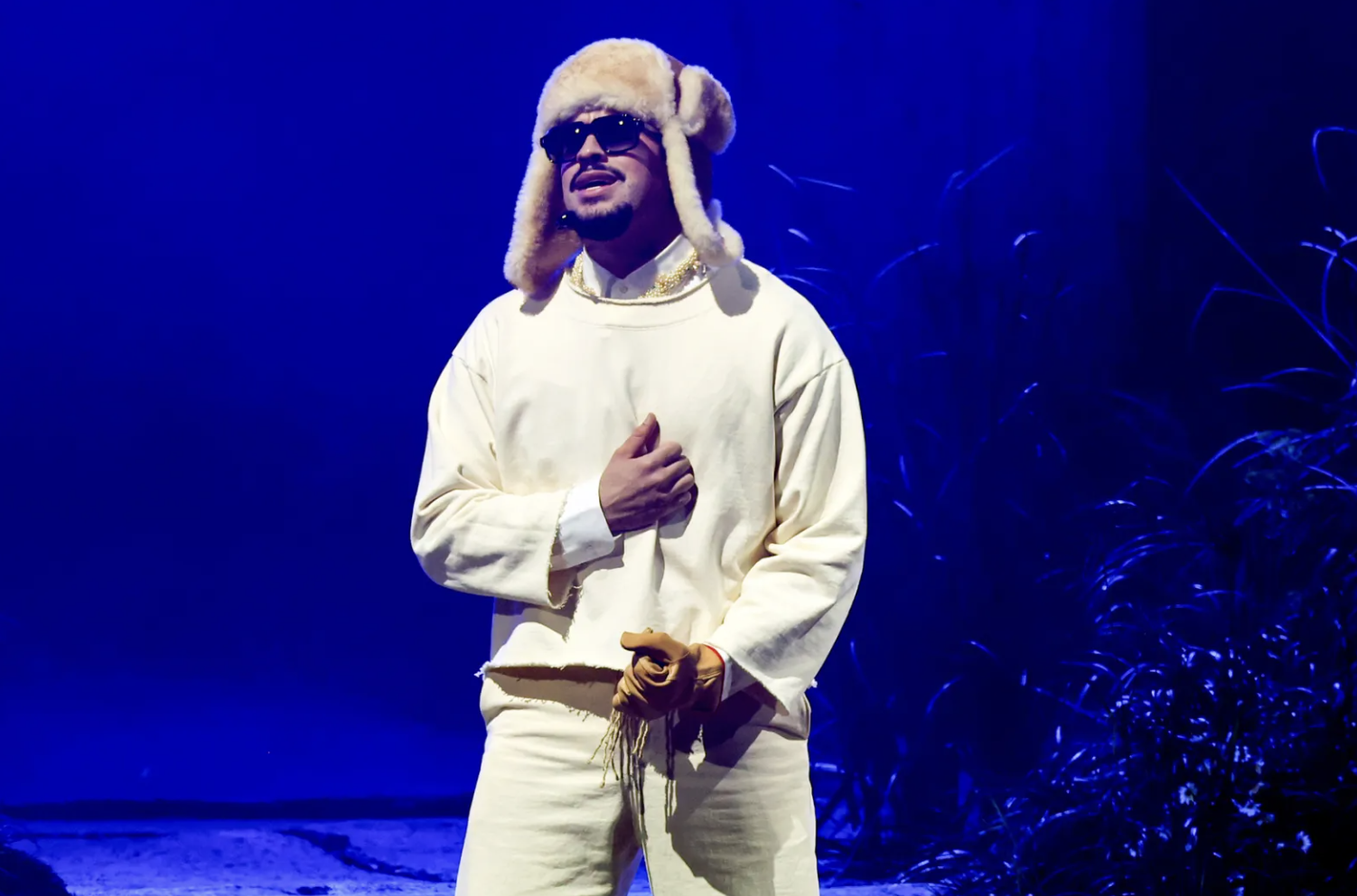
🔥 Bad Bunny at the Super Bowl: Culture’s Biggest Crossover Play

The NFL just locked in its most culturally charged halftime act yet: Bad Bunny will headline the 2026 Super Bowl show in Las Vegas. This isn’t just music programming - it’s a seismic brand moment. The Puerto Rican megastar is the most streamed artist in the world for four years running, a global fashion collaborator, and a cultural force who bridges Latinx, Gen Z, and mainstream audiences like no one else. For the NFL, it’s a move that speaks directly to younger, more diverse audiences. For brands circling the Super Bowl ecosystem, it’s a jackpot.

There had been months of speculation around Taylor Swift as the likely headliner, fuelled by her unprecedented touring dominance and NFL-adjacent fandom via the Travis Kelce storyline. However, industry chatter suggested licensing and rights complexities around her catalogue made it a difficult deal to finalise - though this was never confirmed by either party. Whether true or not, the rumours underline the scale of negotiations that come with locking in the world’s biggest music stage. The pivot to Bad Bunny signals a bold choice: prioritising global cultural cachet over the safe, expected option.

📊 Supporting Stats

  • 133.5M: Viewers tuned in for Kendrick Lamar’s 2025 halftime show - the most-watched in Super Bowl history (Nielsen). Bad Bunny’s draw could surpass this, given his crossover fan base.

  • 50M+: His Instagram following, amplified by fan accounts, guarantees global reach far beyond the game.

  • +44%: Growth in Hispanic NFL fandom over the last decade (Nielsen Sports), making Bad Bunny the perfect bridge.

  • $7–8M: Cost of a 30-second Super Bowl ad (Fox Sports). Adidas - Bad Bunny’s sneaker partner - may get minutes of organic exposure for free.

  • 1 in 3 Gen Z fans: Now say halftime shows are their primary reason for watching the Super Bowl (Wasserman Collective Report 2025).


This is a high-ROI cultural play for all sides. The NFL positions itself as in-step with youth culture, pushing back against the perception of being slow to diversify its entertainment. Bad Bunny cements his status as the most bankable live performer on the planet. And brands - especially Adidas - get a once-in-a-lifetime activation moment ahead of the BadBo 1.0 sneaker launch.

The only risk? Over-commercialisation. If the halftime show feels too much like an Adidas rollout, it could blunt cultural credibility. But if done with subtlety, the crossover potential is unprecedented.

📌 Key Takeouts

  • What happened: Bad Bunny is confirmed to headline the 2026 Super Bowl halftime show in Las Vegas.

  • Why it matters: He’s the world’s most streamed artist and a cultural lightning rod with unmatched reach across Gen Z and Latinx audiences.

  • Commercial logic: Adidas stands to win big with organic global visibility, saving millions in ad spend.

  • Cultural impact: The NFL signals it’s serious about engaging younger, more diverse fans.

  • The Swift subplot: Taylor Swift was heavily rumoured but reportedly faced rights/licensing hurdles - speculation that highlights the NFL’s complex halftime negotiations.

🔮 What We Can Expect Next
Expect Adidas to leverage this moment as a global launchpad for the BadBo 1.0, making it more than a sneaker drop - a cultural event. Rivals like Nike, Puma, and On will be scrambling for counter-moves, either with athlete-driven collabs or other high-visibility entertainment tie-ins.

For the NFL, the bet is that Bad Bunny draws new viewers who stay loyal. If the ratings beat Kendrick Lamar’s record, we could see a new era where halftime shows dictate as much cultural capital as the game itself.

The playbook is clear: the Super Bowl isn’t just football, it’s the world’s biggest stage for cultural convergence - and in 2026, Bad Bunny is the face of it.

categories: Entertainment, Sport, Music
Thursday 10.02.25
Posted by Vicky Beercock
 

🔥 From Stands to Screens: How Mexico Made Women’s Football a Major League Business

Mexican women’s football is no longer a side story. Liga MX Femenil has gone from experimental league status to one of the most dynamic growth engines in global sport. Stadiums are filling, broadcast numbers are breaking records, and commercial partners are finally realising the business upside of backing female athletes. The real question for brand strategists: is this just momentum - or a genuine power shift in sports culture?

📊 Supporting Stats

  • Stadium attendance for Liga MX Femenil hit 551,000 in 2023, ranking it third globally for average game attendance - only behind England’s Women’s Super League and Germany’s Frauen-Bundesliga.

  • The Clausura 2023 final drew 3.6 million OTA viewers, making it the most-watched women’s football match in North America ever.

  • Social media audiences for Liga MX Femenil teams grew 156% year-on-year, with TikTok and Instagram driving the most engagement.

  • Sponsorship ROI is outpacing the men’s game: Liga MX Femenil sponsorships deliver 2–3x stronger returns than Liga MX men’s teams.

  • In 2024, the Mexican Senate approved equal base salaries for male and female athletes, putting structural change into law.


Liga MX Femenil has achieved what many leagues globally are still chasing: embedding women’s sport into mainstream fandom. The data shows not just participation growth but financial logic for brands. The sponsorship multiple alone reframes women’s football from “cause-driven investment” to high-return media property. Strategically, it’s a case study in how sport can evolve by centring inclusivity without diluting spectacle.

📌 Key Takeouts

  • What happened: Liga MX Femenil surged in attendance, TV viewership, sponsorship revenue and social traction.

  • What works: Strategic sponsorships (Nike, Spotify, Barbie collabs with Tigres Femenil), improved media coverage, and legal reforms driving equality.

  • What hasn’t landed: Media rights value still lags far behind men’s football; some matches are relegated to secondary venues, hurting attendance.

  • Why it matters: Women’s football in Mexico is proving both commercially sustainable and culturally resonant - not just an add-on but a core product.

  • For brands: This is a proven growth platform with superfans ready to reward sponsors. The cultural equity upside is as strong as the financial.

🔮 What We Can Expect Next
Expect more global players to enter Liga MX Femenil, drawn by the visibility and competition. International sponsors will test Mexico as a staging ground for women’s sports marketing, much like the US was for the WNBA. The risk? Oversaturation or commodification - but for now, momentum is real, and audiences are leaning in, not burning out.

✨ Source: The Collective, Wasserman

categories: Impact, Sport
Thursday 10.02.25
Posted by Vicky Beercock
 

💸 Courts, Kits & Capital: Women’s Sport Just Became the Hottest Investment

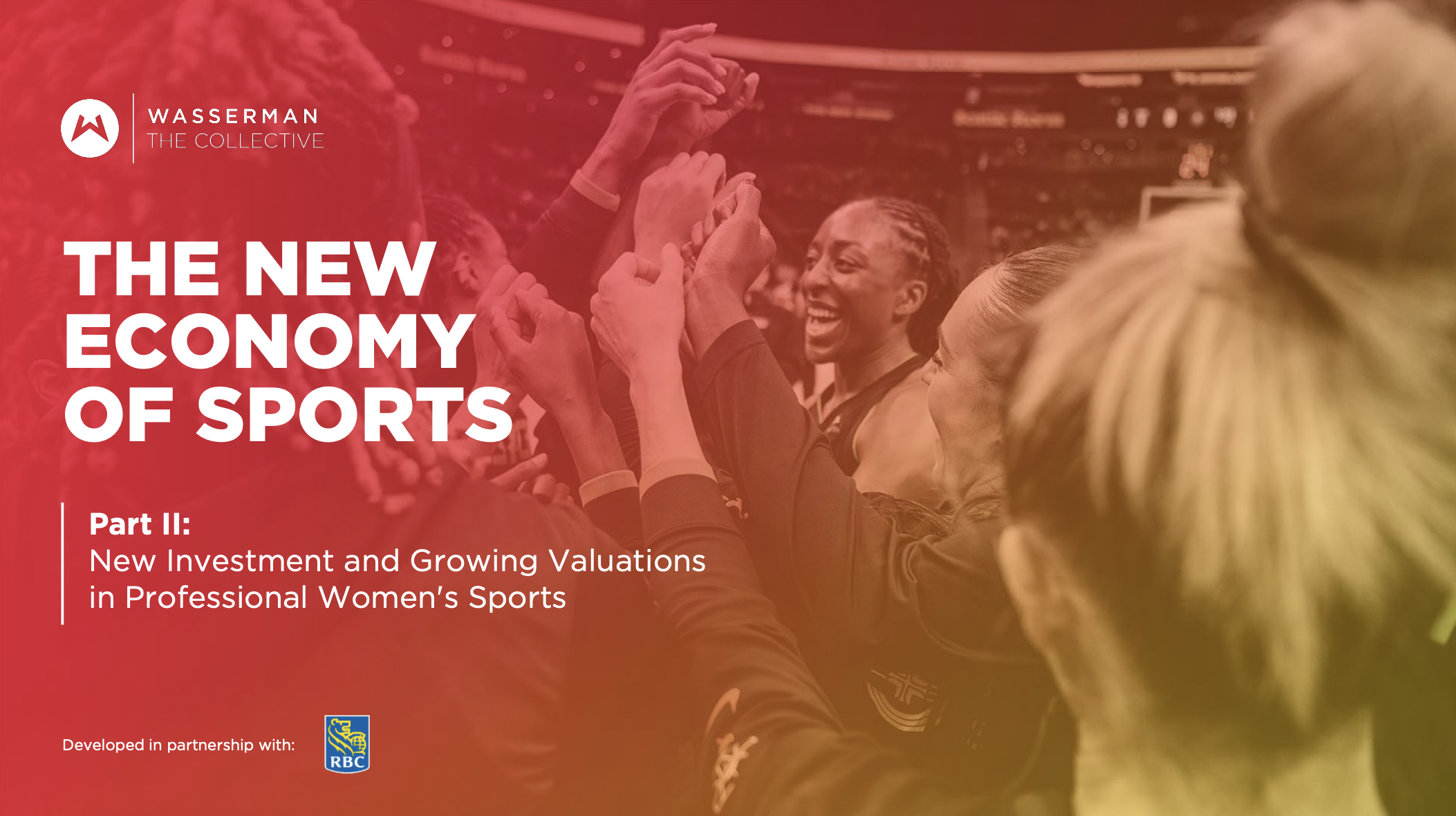
Women’s sport isn’t “emerging” anymore - it’s exploding. Stadiums are selling out, jersey patches are hitting seven figures, and investors are fighting for a seat at the table. According to Wasserman Collective’s New Economy of Sports report (with RBC Sports Advisory), this isn’t just hype. It’s a billion-dollar market growing faster than most men’s leagues.

What used to be framed as a passion project is now a premium asset class. The message is clear: get in now, or get left behind.

📊 The Numbers Don’t Lie

The Wasserman Collective study lays it out:

  • $1.3B in 2024: That’s the revenue projection for women’s sport worldwide — with 85% of experts calling double-digit growth the new normal.

  • Valuations on the rise: WNBA + NWSL teams are set to jump by $1.6B over the next three years. Live attendance is up +48% in the WNBA and +42% in the NWSL year-on-year.

  • Fans with money to spend: Women’s sports fans are 67% more likely to sit in higher-income brackets than men’s fans — and 54% more likely to remember sponsor brands.

  • Angel City FC blueprint: Founded in 2021, now valued at $250M. That’s not charity, that’s a unicorn.

Women’s sport has gone from undervalued to undeniable.

  • Commercially: Team values and sponsorship deals are hitting real-money territory.

  • Culturally: Fans are younger, global, and vocal - and they’re demanding women’s sport be taken seriously.

  • Creatively: Ownership is where culture meets capital. Serena Williams, Naomi Osaka, and Angel Reese aren’t just icons — they’re team investors.

Wasserman Collective’s data makes one thing obvious: investing in women’s sport isn’t good PR. It’s good business.

📌 Key Takeouts

  • Women’s sport is officially a billion-dollar economy.

  • WNBA + NWSL valuations are set to climb $1.6B by 2027.

  • The fanbase is young, wealthy, and hyper-engaged - dream territory for brands.

  • Angel City FC proved you can launch and scale to $250M valuation in 3 years.

  • The culture around women’s sport - from packed stadiums to TikTok virality - is fuelling one of the fastest-growing markets in entertainment.

🔮 What’s Next

The wave is just starting. Expect:

  • Scarcity premium: Fewer franchises available = valuations skyrocketing.

  • Private equity heat: With lower barriers than men’s leagues, PE firms are circling hard.

  • Purpose-built arenas: Women’s teams will stop borrowing men’s stadiums and start selling out their own.

  • Celebrity money + cultural clout: Ownership groups stacked with artists, athletes, and activists will become the norm.

The future of sport doesn’t look like the past. Women’s teams are building their own playbook - faster media cycles, higher engagement, and ownership models that feel closer to fashion drops or tech startups than old-school sports clubs.

And for anyone still calling women’s sport a “niche”? The Wasserman Collective just dropped the receipts.

categories: Entertainment, Culture, Impact, Sport
Thursday 10.02.25
Posted by Vicky Beercock
 

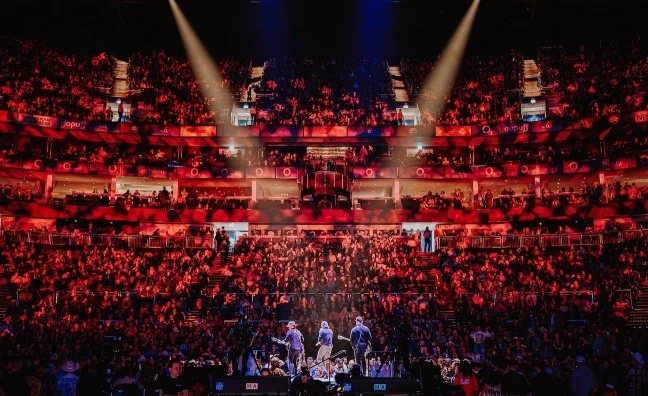
🎤 Superfans, Spend and Sustainability: How Gen Z is Rewiring Live Entertainment

AEG’s new Live Effect report lands at a pivotal moment for the live industry. While inflation and economic uncertainty are reshaping spending across categories, live events are proving to be one of the most resilient experiences consumers won’t give up. And the driving force? Gen Z superfans who are redefining what it means to belong to an artist community.

📊 Supporting Stats

  • 57% of consumers prioritise travel and vacations, but *41% rank live entertainment as a top spending priority - putting it ahead of electronics (17%) and even fitness memberships (20%).

  • 46% of fans say they’d still spend on live shows during financial pressure, increasing to 55% among Millennials.

  • 79% agree live music creates a sense of community digital platforms can’t match; 70% say they’ve felt ‘at home’ at shows, and 63% have bonded with strangers at gigs.

  • Gen Z are the most extreme: 21% have made or bought homemade signs, 16% queued overnight, and 12% got tattoos linked to artists.

  • Nearly half (48%) of attendees identify as part of a fan community, rising to 65% among Gen Z.

  • Sustainability is non-negotiable: 68% of Gen Z and 67% of Millennials want greener live events, with 61% willing to pay more for shows that support environmental initiatives.

The live business has successfully repositioned itself as essential cultural infrastructure. For Gen Z, live music sits on the same level as travel in terms of social value. The framing of “superfan energy” is commercially powerful: AEG is showing brands that partnerships in live music aren’t just media slots, but entry points into deeply bonded communities.

Where this works:

  • The emotional pull of fandom translates into price resilience even in downturns.

  • Fans’ willingness to go to extremes (signs, tattoos, overnight queues) shows live events deliver more identity value than almost any other leisure category.

  • Sustainability commitments make the experience feel future-proof and audience-aligned, which is critical to younger demographics.

Where it risks overreach:

  • Not every brand can authentically integrate into these communities without feeling opportunistic.

  • The “superfan” narrative is sticky, but over-commodifying it risks backlash if brands don’t provide genuine value or respect the culture.

📌 Key Takeouts

  • What happened: AEG released a study spotlighting Gen Z’s role in driving live music’s resilience and cultural centrality.

  • What’s working well: Clear data shows live entertainment is a priority spend and a vital source of identity/community.

  • What’s not landing: The industry still faces risk of brand fatigue if every partnership chases superfans without deeper cultural fit.

  • Signals for culture: Travel, live shows and fashion remain top discretionary spends - meaning experiences that feel like belonging are outcompeting tech and material goods.

  • Strategic takeaway: For brands, the opportunity lies not just in sponsoring stages, but in co-creating culture alongside fan rituals and sustainability values.

🔮 What We Can Expect Next

Expect to see more crossovers between live events and lifestyle brands that lean into fandom culture - from fashion drops at festivals to green-branded ticketing initiatives. But as the space crowds, authenticity will be the differentiator. The winners will be those who embed themselves naturally into community rituals (think cowboy hats at C2C or Brat green at Charli XCX), rather than parachuting in with transactional sponsorships.

Superfans aren’t going anywhere - but the brands that respect the culture will be the only ones invited to stay.

categories: Impact, Entertainment, Culture, Music
Thursday 10.02.25
Posted by Vicky Beercock
 

🎟️ Power Play: Why Live Nation’s Grip on Live Music is Finally Being Challenged

The Association of Independent Festivals (AIF) has drawn a hard line: it wants Live Nation broken up. The world’s biggest live entertainment company - owner of Ticketmaster, 250+ venues, and the lion’s share of the touring ecosystem - is facing scrutiny on both sides of the Atlantic. UK lawmakers have heard evidence that Live Nation controls 66.4% of the live music ticketing market; in the US, the DOJ alleges it controls at least 80% of primary ticketing for major venues.

This is a cultural access issue. When one company dictates how fans, artists, promoters, and venues interact, the risks of inflated pricing, reduced competition, and shrinking cultural diversity escalate.

📊 Supporting Stats

  • 200 UK festivals have disappeared since 2019 (AIF, 2025), citing financial pressure and market distortion.

  • $3.7 billion: resale fees Ticketmaster earned between 2019–2024 by facilitating broker resales (FTC lawsuit, 2025).

  • The average ticket price for a concert in 2024 was $72, compared to $120+ for major sporting events (Pollstar, Statista).

  • Dynamic pricing spikes saw Oasis reunion tickets jump by 200% in minutes, sparking regulatory complaints in the UK (CMA, 2025).

  • Live events remain crucial to culture: 59% of Gen Z in the UK say live music is their most valued entertainment spend (UK Music, 2024).

🧠 Decision: Does It Work?

For Live Nation, the model has been commercially bulletproof - scale has delivered dominance. But culturally and politically, the tide is turning. When the CEO publicly suggests tickets are “underpriced” while fans complain about paying £800+ for Beyoncé, the optics are disastrous.

From a brand strategy perspective, Live Nation has overplayed its hand. The balance between profit and public trust has tipped, inviting regulators, lawmakers, and the industry itself to unite against them. What once looked like unassailable dominance now looks like a liability.

📌 Key Takeouts

  • What happened: AIF called for Live Nation’s breakup, aligning with US lawsuits accusing the company of monopoly behaviour.

  • What worked for Live Nation: Market scale and control over both ticketing and venues built a global live music empire.

  • What’s breaking down: Public trust, fan goodwill, and political patience - the monopoly narrative is sticking.

  • Signal for the industry: Audiences demand fairer access and pricing transparency. Regulators smell blood.

🔮 What We Can Expect Next

Expect louder calls for antitrust action, both in the UK and US. Even if Live Nation avoids a formal breakup, pressure will likely force concessions: fairer resale rules, stricter broker crackdowns, and clearer ticket pricing.

For independent festivals and promoters, this could be a moment of opportunity - a shift back towards grassroots music culture and authentic fan-first experiences. But the risk of fan fatigue is real: if prices keep climbing and trust keeps eroding, live music could shift from being the heartbeat of youth culture to a luxury for the few.

The cultural question is no longer whether fans will pay - it’s whether they’ll stay.

categories: Culture, Entertainment, Music, Impact
Thursday 10.02.25
Posted by Vicky Beercock
 

🩸 Data, Dignity, and the Women’s Game: UEFA Puts Menstrual Health on the Agenda

For too long, women’s sport has operated on male defaults. Training plans, injury models, even the bulk of sports science research - all built around male bodies, while menstrual health was either sidelined, stigmatised or ignored.

UEFA’s new consensus on menstrual cycle tracking in football is a cultural reset. It doesn’t over-promise on performance hacks - the evidence linking phases to wins or injuries is still inconclusive. But it does something more important: it puts menstrual health on the official agenda.

That shift is more than symbolic. It signals to athletes that their biology is part of the system, not an afterthought. It gives coaches and medics a framework that treats menstrual data with the same seriousness as sleep or training load. And it forces the wider industry to acknowledge that women’s sport needs its own science, not hand-me-downs.

📊 The Stats That Show Why This Matters

  • Participation gaps: UNESCO reports that 49% of girls drop out of sport during adolescence, six times the dropout rate of boys. Menstrual discomfort and stigma are leading reasons.

  • Elite level disruption: Studies show up to 90% of female athletes experience menstrual symptoms that can affect training, while 40–60% report direct performance impacts in competition phases.

  • Health red flags: Around 30% of female athletes experience irregular cycles, and 4% report periods stopping entirely — often linked to overtraining or low energy availability. These are not just medical issues; they’re retention and performance risks.

  • Research inequity: Only ~35% of sports science study participants are women. This means protocols for training, nutrition and injury prevention are often designed without female physiology in mind.

  • Commercial momentum: Women’s sport is on an upward curve - UEFA competitions drew over 240m spectators last season, while global sponsorship value of women’s football alone is forecast to pass $1bn by 2030. Ignoring menstrual health in this context is no longer tenable.

🧠 Why This Is a Strategic Win

UEFA’s framework is less about “find your best phase to peak” and more about data, dignity and trust. It:

  • Normalises menstrual tracking as a standard health protocol in football.

  • Emphasises voluntary participation and data privacy — crucial to avoid coercion or misuse.

  • Sets minimum metrics (bleeding regularity, symptom logs, ovulation checks) so clubs can build consistent datasets.

  • Calls for player education, making athletes active agents in their own health.

For brands, federations and clubs, the message is clear: this is infrastructure, not optics. Menstrual health belongs in the same column as conditioning, sleep, nutrition and injury prevention.

📌 Key Takeouts

  • Women’s sport has historically lacked evidence-based systems that reflect female biology.

  • Menstrual health is no longer a taboo topic but a core pillar of athlete care.

  • The data shows menstrual symptoms affect a majority of female athletes, from grassroots to elite.

  • UEFA’s move gives credibility, structure and ethical guardrails to an area long clouded by stigma and myth.

  • Commercially, it signals maturity: women’s sport is being built on serious systems, not shortcuts.

🔮 What’s Next

Expect this to ripple far beyond football. Rugby, athletics, basketball, tennis - all will face pressure to adopt similar frameworks. Tech companies will pivot towards privacy-first tracking tools built for team environments. Sponsorship and brand campaigns will increasingly lean into education and empowerment narratives around menstrual health, rather than token pinkwashing.

But the biggest shift? Players and coaches having open, informed conversations about periods as naturally as they do about training loads or sleep schedules.

That’s what “being taken seriously” looks like in women’s sport.

categories: Impact, Sport
Thursday 10.02.25
Posted by Vicky Beercock
 

On The Record Linkedin Newsletter: 29th September 2025

Monday 09.29.25
Posted by Vicky Beercock
 

🔥 The British Museum Wants Its Own Met Gala Moment

On 18 October, the British Museum will stage its inaugural fundraising ball - an invite-only, high-glamour night pitched with “Met Gala ambition”. The move signals more than just a splashy cultural calendar addition. It reflects a broader funding shift happening across UK institutions, where survival and relevance increasingly hinge on borrowing tactics from the American playbook: spectacle, philanthropy, and long-term private support.

📊 Supporting Stats

  • The Met Gala raised $22 million for the Met in 2023 (Business of Fashion).

  • The UK luxury market is projected to hit £59.6 billion by 2028 (Statista), underscoring why cultural institutions are linking themselves more tightly to luxury and fashion economies.

  • The Tate recently announced a £150 million endowment drive (with £43 million already secured) to futureproof itself against shrinking public funding — a stark reminder that government grants alone no longer sustain cultural ambition.

🧠 Decision: Did It Work?
Yes, strategically. For the British Museum, the ball is a brand-building move: aligning itself with global culture capitals while drawing in new tiers of donor engagement. Unlike Tate’s endowment, which plays the long game, the Museum is choosing the high-visibility, big-night-out route - a reminder that fundraising is as much about optics as it is about money.

The ambition works on paper. But execution will be everything. Unless the Museum leans into London’s own cultural DNA - heritage fashion, rebellious art, the city’s music edge - it risks being dismissed as a Met Gala imitation. Add in the ongoing optics of its BP sponsorship, and the challenge is to show that the Museum’s cultural relevance outweighs its corporate baggage.

📌 Key Takeouts

  • What happened: The British Museum launches its first fundraising ball, pitched as London’s answer to the Met Gala.

  • What worked: Clever positioning, exclusivity, and a clear ambition to place London on the global cultural fundraising map.

  • What didn’t: Danger of being seen as derivative; reputational risks tied to existing sponsorships.

  • Signals: The Tate’s £150m endowment drive shows the other side of the same coin - UK institutions adopting US-style funding models to stay competitive.

  • For brands: Partnerships with these cultural powerhouses are becoming high-stakes opportunities. But alignment matters - audiences will scrutinise who you fund and why.

🔮 What We Can Expect Next
The British Museum ball could trigger a domino effect: Tate, V&A, and the Royal Academy experimenting with their own Met Gala-style fundraisers alongside endowment-building. If London plays it right, it could hardwire itself into the same global cultural fundraising circuit as New York and Paris. But the question remains: will UK audiences embrace this Americanisation of arts funding, or push back against the creeping influence of private wealth and corporate logos on public culture?

categories: Fashion, Culture
Sunday 09.28.25
Posted by Vicky Beercock
 

🔥 Runways Became Raves: LFW S/S 2026 in Full Volume

London Fashion Week just wrapped and, as always, the city reminded everyone why it’s the wild card of fashion month. Paris has its couture codes, New York flexes commercial polish, but London? It’s where heritage houses and upstart names crash worlds together - music, politics, folklore, nightlife - turning runway shows into cultural events. With Laura Weir stepping in as BFC CEO and scrapping designer show fees, the ecosystem itself feels like it’s levelling up. Add in a Burberry blockbuster finale and a raft of underground visionaries, and this season felt less like a schedule and more like a playlist of cultural drops.

📊 Supporting Stats

  • The British Fashion Council estimates LFW generated £310M+ in direct spending last year - early signals suggest 2025 topped that, driven by new sponsorships and global guest attendance. (BFC, 2025)

  • TikTok lit up with #LFW2026 racking over 280M views in one week (Launchmetrics, 2025) - proof that runway is now content-first, commerce-second.

  • Nielsen data shows 67% of Gen Z say music-led fashion moments feel more “authentic” than traditional ads (Nielsen, 2024) - which made Burberry’s festival-coded closer feel more like brand logic than gimmick.

  • Conner Ives’ “Protect the Dolls” tee has raised $600K+ for Trans Lifeline, showing how values-driven merch can live beyond the runway.


London delivered. The shows that hit hardest weren’t just loud - they had layers. Burberry doubled down on music as Britain’s global export. H&M proved a high-street giant can crash the LFW main stage if it plays with spectacle. Conner Ives showed how pop culture + politics + commerce can exist in one breath. Paolo Carzana, Johanna Parv, Chopova Lowena and Leo Prothmann grounded the week in narrative and craft - proof that London’s edge isn’t just hype, it’s hybridity. The risk? Everyone chasing the “festival” lane until it feels like cosplay. But when it’s rooted in story, it still slaps.

📌 Key Takeouts

  • H&M: Turned 180 The Strand into a three-act fashion-gig mashup, front row stacked with Central Cee, Little Simz and EmRata. The play? Show the masses that the high street can do high drama.

  • Burberry: Daniel Lee’s British summer/festival fantasy — crochet, python print, neon checks, denim trenches — landed because it connected music’s cultural capital with Burberry’s DNA. Heritage as hype.

  • Conner Ives: Neon glam, trans/non-binary casting, Gaga on a tee, Robyn on the speakers. A pop manifesto with receipts (those charity dollars). Authentic, loud, political.

  • Paolo Carzana: British Library takeover with endangered species as muses. Dye work in alien shades, silhouettes like ghostly relics. Romantic activism with buying power.

  • Jawara Alleyne: Carnival hangover vibes — safety-pins, Converse collab, broken cymbals as jewellery. Pure subcultural chaos made wearable.

  • Simone Rocha: Still the master of twisted femininity. Crinolines skewed, vinyl layered over silk, accessories that whisper “dark romance.”

  • Johanna Parv: Functional chic - cycling uniforms hacked into chic armour. Bags that clip to bike frames but look runway sharp. Utility as luxury.

  • Leo Prothmann: Silverfin leather gowns, riders and guardians on stage, classical-to-techno soundtrack. A myth-meets-material sanctuary.

  • Chopova Lowena: Cheerleaders for the weirdos. Carabiner skirts with sport jerseys, death metal soundtracks, pom-pom armour. Cult as community.

  • Fashion East: 25 years in and still the incubator of chaos. Mayhew, Nuba, Gleba all pointing to a future where London stays the lab.

🔮 What We Can Expect Next
London’s showing us the template: runway as drop, not just display. The “festival crossover” wave is peaking - expect saturation fatigue unless brands root it in story or craft. Watch for a post-spectacle shift: ecological materials (Silverfin leather, Ouyang’s yarn experiments), values-driven merch (Ives’ tees), and problem-solving design (Parv’s cycling couture) will shape where hype meets longevity. If LFW 2026 proved anything, it’s that London is still the cultural plug of fashion month - unpredictable, risky, and impossible to scroll past.a

categories: Fashion
Sunday 09.28.25
Posted by Vicky Beercock
 

⚽💄 Spurs & e.l.f.: Beauty on the Back, Culture on the Pitch

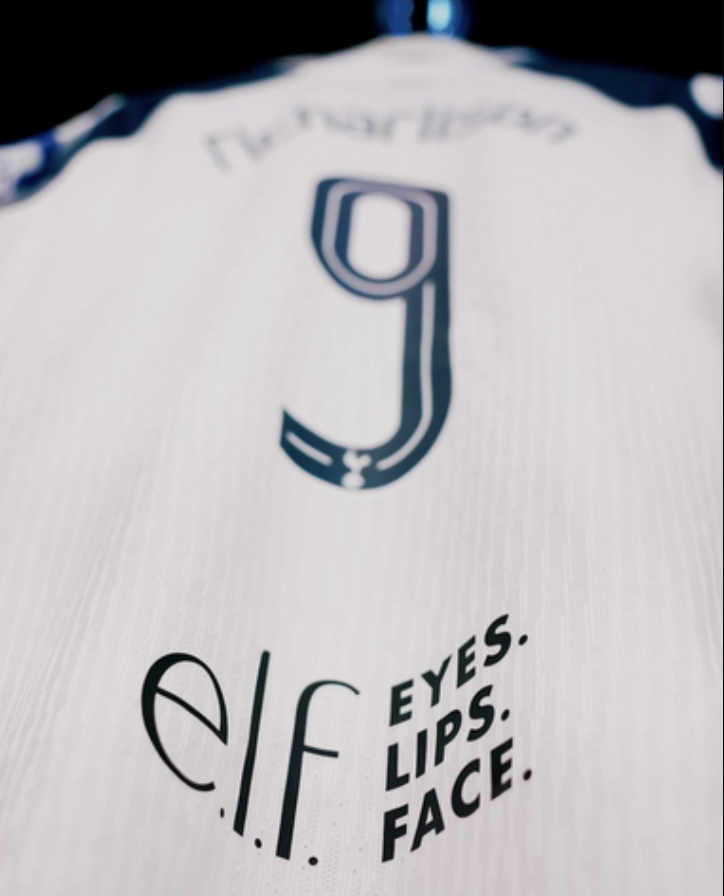
e.l.f. Cosmetics just took its boldest step yet in sports marketing - appearing on the back of both Tottenham Hotspur Women’s and Men’s shirts during their Carabao Cup matches on 24 September. What looks like just another sponsorship placement is actually a strategic milestone: e.l.f.’s first-ever presence in men’s sport in the U.K., while doubling down on its ongoing commitment to women’s football.

This wasn’t about chasing media value in a midweek cup run. It was about symbolism - beauty showing up in unexpected places, at the same time, across two sides of the same club.

📊 Supporting Stats

  • The global sports sponsorship market is valued at $67.6B in 2025 (Statista), with beauty brands still underrepresented compared to financial services, tech and betting.

  • Women’s sport has seen a 22% rise in global sponsorship deals year-on-year (WARC, 2025), but men’s football remains the most lucrative category, accounting for over 50% of sponsorship spend.

  • e.l.f.’s own record speaks volumes: Super Bowl spots from 2023–25 gave the brand exposure to audiences of over 100M viewers per game (Nielsen).

🧠 Decision: Does It Work?

Yes - but for reasons that go beyond impressions.

  • Culturally, it’s a power play. e.l.f. isn’t just sponsoring women’s football (which could be dismissed as niche or purpose-driven); it’s deliberately bridging men’s and women’s matches in the same week, levelling the visibility field. That communicates consistency, not tokenism.

  • Commercially, Spurs is a savvy choice. The club has a strong women’s side, a men’s team with global reach, and a fan base that skews younger and digital-first - aligning with e.l.f.’s core audience.

  • Creatively, the placement works. Back-of-shirt isn’t front-of-kit headline space, but it is an owned canvas visible in broadcast replays and highlights. For a brand built on digital amplification, it’s more about the ripple than the real estate.

The risk? Dilution. Inserting a beauty brand into men’s football could be seen as incongruous if activations don’t follow. A one-night stand won’t cut it - the credibility will rest on whether e.l.f. continues to build fan-facing experiences around the partnership.

📌 Key Takeouts

  • e.l.f. became back-of-shirt sponsor for both Spurs Women and Men in Carabao Cup matches on 24 September.

  • This was the brand’s first U.K. men’s football appearance, while continuing its women’s football commitment until 2026.

  • Symbolically, same-day sponsorship across both teams reinforces e.l.f.’s inclusivity and anti-tokenism message.

  • Commercial logic: Spurs offers global visibility and younger fan engagement, aligning with e.l.f.’s audience.

  • The placement is less about logo size, more about narrative - beauty showing up confidently in male-dominated spaces.

  • The long-term win will depend on follow-through activations that connect beauty and football culture in authentic ways.

🔮 What We Can Expect Next

Expect more beauty brands to make tactical moves into men’s football. e.l.f. just showed how to do it without losing credibility - by framing it not as a one-off stunt but as part of a wider, ongoing sports strategy. If they activate cleverly around content, community and commerce, e.l.f. could cement itself as the beauty brand rewriting the rules of sports sponsorship.

The bigger shift? Sponsorship is no longer about slapping a logo on a shirt. It’s about occupying cultural whitespace. And right now, beauty on the back of a men’s kit feels less like a mismatch and more like a cultural mic drop.

categories: Impact, Sport, Beauty
Sunday 09.28.25
Posted by Vicky Beercock
 

🍺📺 Netflix x AB InBev: Streaming Meets the Social Occasion

Netflix just inked a global co-marketing deal with AB InBev - the brewer behind Budweiser, Stella Artois, and Corona - to pair binge-worthy shows with beers. Campaigns will roll out around titles like The Gentlemen (UK) and Culinary Class Wars (South Korea), supported by limited-edition packaging, digital activations, and event tie-ins. It’s the latest in Netflix’s brand partnership push, now fuelled by its growing ad business and live sports footprint.

📊 Supporting Stats:

  • Netflix’s ad-supported tier has grown to 94M users worldwide just two years after launch (Reuters, 2025).

  • AB InBev controls 27% of the global beer market by volume (Statista, 2025).

  • Streaming + sport = big reach: Netflix will host the NFL’s Christmas Day broadcast and co-market around the 2027 Women’s World Cup, both beer-heavy viewing occasions.


This partnership is culturally fluent: both streaming and beer thrive on shared experiences, whether that’s a match, a party, or a binge night. Netflix gains access to one of the most global CPG marketers, while AB InBev stays culturally relevant by embedding itself into the shows and events that audiences actually care about.

📌 Key Takeouts:

  • What happened: Netflix and AB InBev signed a global deal to co-market TV shows and beer.

  • What worked: The tie-in feels natural; both brands trade in social, shared occasions. The use of packaging, sports, and live events makes it multi-channel.

  • Potential weakness: Without sharp creative execution, the partnership risks blending into generic “watch + drink” messaging.

  • Strategic signal: Netflix is leaning hard into ad partnerships, not just subscription growth. AB InBev is evolving from mass sponsorship to culturally specific tie-ins.

  • For marketers: The move shows that “occasion-based” partnerships - aligning products with how and when people consume content - is where ad money is flowing.

🔮 What We Can Expect Next:
Expect to see more CPG giants aligning with streaming platforms as live sports on OTT grows. If Netflix can make beer pairings feel distinctive - think character-led packaging, show-inspired flavours, or interactive watch-party activations - it sets a new bar for brand integration. But if it defaults to generic co-branded ads, audiences may tune out. Either way, the play signals a future where streaming isn’t just where you watch, but where culture, commerce, and consumption collide.

categories: Entertainment
Sunday 09.28.25
Posted by Vicky Beercock
 

🔥 Courtside Shift: The WNBA’s Expanding Audience

The WNBA’s surge this season isn’t just about Caitlin Clark headlines or record-breaking attendance - it’s about who’s showing up. For the first time, the league has made clear that its fanbase is far broader than the stereotype of a niche women’s sports audience.

📊 The numbers tell the story: 57% of this season’s W fans were men, and viewership among male fans under 18 has grown 130% over the past four years, with Clark’s debut alone driving a 34% spike. That’s generational traction - proof that the W is embedding itself into basketball culture at large, not just women’s sport.

This broadening fan profile has real commercial weight. Bigger, more diverse audiences mean stronger bargaining power with broadcasters, sponsors, and - crucially - arena operators. The days of W teams being displaced from their home courts for concerts or lesser events are fading. Case in point: the Phoenix Mercury, deep in the playoffs, forced the Jonas Brothers to take a back seat. That’s cultural leverage in action.


The WNBA’s growth story is now about ownership of cultural space, not just audience metrics. By proving it can draw - and hold - male fans without losing its connection to the women and girls who built the league’s foundation, the W is positioning itself as a mainstream property with long-term commercial stability.

📌 Key Takeouts:

  • 57% of WNBA fans this season were men - challenging outdated perceptions of who watches women’s sport.

  • Male fans under 18 are up 130% in four years, showing the W is resonating with the next gen of hoop culture.

  • Caitlin Clark’s debut was a tipping point moment, driving a 34% spike in male viewership.

  • Stronger demand is shifting power dynamics: teams like the Phoenix Mercury can now hold onto their arenas in high-stakes moments.

  • This signals the W’s transition from a “women’s sport” niche to a cultural force embedded in wider basketball fandom.

🔮 What’s Next:
Expect the WNBA to lean into this dual identity - the league of the basketball girlies and the new wave of male fans raised on Clark, A’ja, and Stewie. That balance will shape how teams market themselves, how media packages games, and how sponsors approach partnerships. The risk? Over-indexing on new audiences at the expense of its core. But if the league keeps walking the line, the W could be entering its first true golden era of mainstream relevance.

categories: Impact, Sport
Sunday 09.28.25
Posted by Vicky Beercock
 

🇮🇪 A First for Irish Culture on Netflix

When House of Guinness dropped, it did more than unveil a dynastic drama - it became the first Netflix series to offer Irish-language subtitles.

In a statement, Netflix noted that including “Irish (Gaeilge)” among the subtitle languages allowed them to lean fully into cultural authenticity and opened the door for audiences who prefer to consume content As Gaeilge.

The move has been hailed as a milestone for Irish representation on global platforms - signalling that cultural specificity is no longer a liability, but a brand asset. (Yes, bold branding move.)

🎧 The Soundtrack: Blood, Beer & Beats

If subtitles were the structural coup, the soundtrack is the emotional engine. What you get is anachronistic fire - a collision of folk, punk, hip-hop and Irish traditional with 19th-century Dublin as rotating backdrop. The music doesn’t sit behind the story - it drags it forward, accents its contradictions, and whispers that history never really leaves us.

Several outlets call the soundtrack “a selling point” - one that fuses Irish folk anthems with Celtic punks, rap rebellions, and haunting modern voices.

The show even leans into this in interviews - Anthony Boyle mentioned that he curated playlists and dropped Irish bands like The Mary Wallopers directly into the creative feeds.

📀 Tracklist & Artists (Episode-By-Episode Highlights)

Below is a distilled guide (not exhaustive) of standout tracks and the artists behind them. Use this like a playlist cheat sheet while you binge.

  • Episode 1
     – “Starburster” - Fontaines D.C.
     – “Get Your Brits Out” - Kneecap
     – “Devil’s Dance Floor” - Flogging Molly
     – “Hood” - Kneecap

  • Episode 2
     – “Cruel Katie” - Lankum
     – “In ár gCroíthe go deo” - Fontaines D.C.
     – “The Rich Man and the Poor Man” - The Mary Wallopers

  • Episode 3
     – “As I Roved Out” - The Mary Wallopers
     – “Goodnight World” - Lisa O’Neill
     – “Another Round” - The Scratch

  • Episode 4
     – “I bhFiacha Linne” - Kneecap
     – “Brother Was a Runaway” - Adrian Crowley
     – “Jailbreak” - Thin Lizzy 

  • Episode 5
     – “Brewing Up a Storm” - The Stunning
     – “Carraig Aonair” - Pebbledash
     – “Choose Life” - Shark School

  • Episode 6
     – “Come Out Ye Black and Tans” - Derek Warfield & The Young Wolfe Tones
     – “The Granite Gaze” - Lankum
     – “Cheeky Bastard” - The Scratch
     – “Boil the Breakfast” — The Chieftains
     – (Multiple others in this ep)

  • Episode 7
     – “Fáilte 2025” IMLÉ
     – “Old Note” - Lisa O’Neill
     – “Go Head” - ROCSTRONG
     – “It’s Been Ages” - Kneecap
     – “Saints and Sinners” - The Feelgood McLouds

  • Episode 8
     – “For Everything” - The Murder Capital 
     – “Starburster” - Fontaines D.C. (reprise)
     – “Beer, Beer, Beer” - The Clancy Brothers
     – “Lawman” - Gilla Band
     – Plus various others like All the Boys on the Dole (TPM), Nausea (Gurriers), The Parting Glass versions

    🎯 Why It Works (- and Where It Risks)

Wins:

  • Cultural authority as marketing. The Irish subtitle inclusion doesn’t feel like a token - it becomes a statement: this is Irish storytelling on your global bill.

  • Sound as emotional amplifier. The genre-blurring, time-bending soundtrack ensures the show hits you before you even realize it. If characters speak in whispers, the beat is already roaring.

  • Cross-audience magnetism. Punk heads, rap fans, folk devotees - the music casts a wide net. If you came for the drama, you stay for the drops.

Risks:

  • Overuse of anachronistic tracks (like Come Out Ye Black and Tans in a 19th-century setting) may rattle purist viewers. Analysts already flagged potential historical stretch.

  • Some tonal dissonance - the clash between a moody period world and street-level rap can feel like tonal whiplash if not handled deftly.

categories: Culture, Impact, Music, Tech
Sunday 09.28.25
Posted by Vicky Beercock
 

🎧 Spotify vs. AI: The Streaming Giant’s Line in the Sand

Spotify just dropped a bombshell: 75 million tracks - largely AI-generated “spam” - have been scrubbed from the platform in the past year. The announcement, paired with new AI protections, signals one of the most aggressive moves yet by a streaming service to regulate how artificial intelligence intersects with music.

For an industry built on credibility, artist identity and royalties, this isn’t just a product update - it’s Spotify planting a flag in the cultural debate over whether AI is a tool or a threat.

📊 Supporting Stats

  • Spotify’s purge covers 75 million tracks, a scale that highlights how much “noise” AI content farms have been generating.

  • Rival platform Deezer recently revealed that nearly a third of all uploads are AI-generated, with over 30,000 fully AI tracks uploaded daily - a 20% increase since January 2025 (Deezer data).

  • The IFPI reports streaming accounted for 67% of global recorded music revenue in 2024, meaning control of catalogue quality is directly tied to industry health.

🧠 Decision: Does This Work?

From a brand and platform strategy perspective, yes - this works. Spotify is aligning itself with artist-first protections at a moment when trust in AI-generated music is thin. By introducing an impersonation policy, a spam filter, and an AI disclosure tool, it positions itself as the “responsible innovator,” supporting creativity while shielding rights-holders from fraud.

The risk? Spotify may frustrate some independent creators experimenting with AI, but culturally, the bigger win is securing legitimacy. For rights holders, labels, and legacy acts worried about deepfake songs cannibalising streams, this is a reputational fortress.

📌 Key Takeouts

  • What happened: Spotify removed 75M AI “spam” tracks and rolled out stricter AI protections.

  • What worked: Strong artist-first positioning; clear guardrails against fraud and voice cloning.

  • What didn’t: Could alienate some DIY creators using AI as part of their process, creating tension between “protection” and “gatekeeping.”

  • Signal: Platforms are now brand-building around trust and credibility, not just catalogue size.

  • For marketers: Transparency and protection are fast becoming value props - audiences want to know brands are safeguarding authenticity.

🔮 What We Can Expect Next

This move sets a precedent. Expect other platforms to follow with their own “AI integrity” policies, turning authenticity into a competitive advantage. But the flood of AI music won’t slow down - with 30,000 tracks dropping daily, enforcement will be whack-a-mole.

For brands in music and culture, the bigger question is whether AI becomes a backstage creative tool or stays framed as a threat. Spotify’s stance tells us the next phase of streaming won’t just be about what music sounds like, but who gets to define what counts as music.

categories: Impact, Music, Tech
Sunday 09.28.25
Posted by Vicky Beercock
 

🍞 Bread, Milk, Capaldi: Aldi’s Most Random Collab Yet

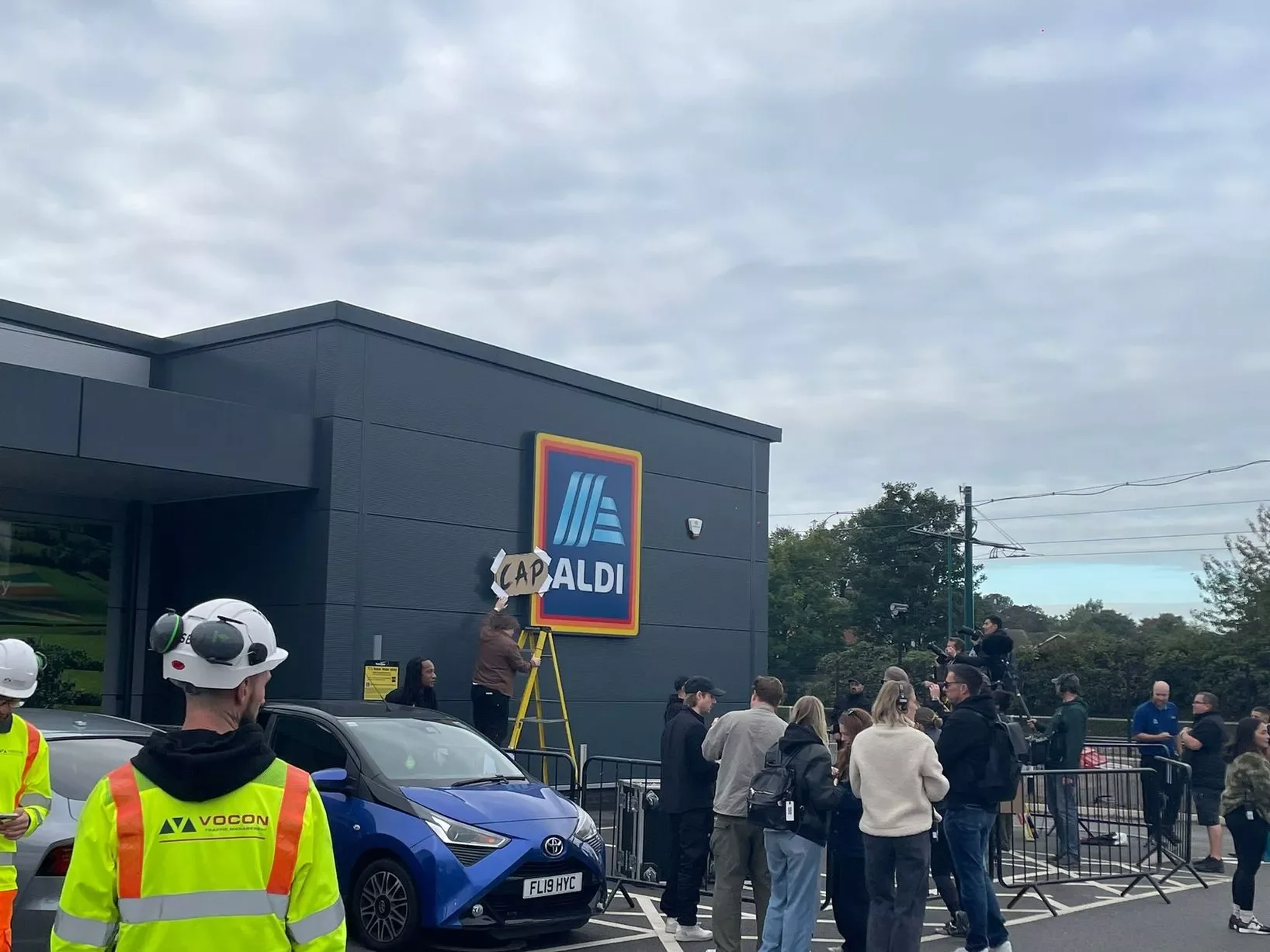
On Friday morning, shoppers in West Bridgford got more than discount groceries - they got Lewis Capaldi, live on the roof of Aldi. Part stunt, part ad shoot, the pop star performed fan favourites alongside his new single Survive, to a mix of unsuspecting locals, pre-arranged “rent-a-crowd,” and shrieking schoolkids.

The surreal mash-up of one of Britain’s biggest supermarkets and one of its most self-deprecating pop exports is a reminder of how cultural moments and marketing activations now blur into one - especially when they’re built for virality.

📊 Supporting Stats

  • Aldi is the UK’s fastest-growing supermarket in 2025, with a 10.4% share of the grocery market (Kantar, Sept 2025).

  • TikTok videos featuring “unexpected concerts” (from rooftops to tube stations) have clocked 2.1B views under related hashtags in the last year (TikTok Trend Report, 2025).

  • Lewis Capaldi’s return to performing after his health-related break has kept him at the centre of UK music chatter: his Broken By Desire tour sold out arenas in under 10 minutes earlier this year (Live Nation, 2025).

This wasn’t just a gig. It was engineered cultural content.

🧠 Decision: Did It Work?

Yes - culturally and commercially, this was a smart play. Aldi gets to borrow Capaldi’s everyman charisma (and his Gen Z–heavy fanbase) to reinforce its underdog charm. For Capaldi, it keeps his comeback narrative warm ahead of his arena show later that night, while generating free press across local and national outlets.

📌 Key Takeouts

  • What happened: Lewis Capaldi performed on top of an Aldi in Nottingham as part of a filmed ad stunt.

  • What worked: Surprising location + star power = viral attention and national coverage.

  • Cultural signal: Supermarkets aren’t just fighting on price anymore - they’re flexing cultural capital.

  • Brand takeaway: Sometimes the strangest pairings (discount supermarket x arena pop star) are the most effective at cutting through.

🔮 What We Can Expect Next

Expect to see more supermarkets and FMCG brands borrow from the playbook of pop-up gigs and cultural surprise drops. The formula is working: cheap to stage, high in earned media value, and primed for TikTok circulation.

But there’s a ceiling. Audiences sniff out over-engineering quickly. The winning brands will be those that pull off moments that feel like accidents, even when they’re meticulously planned.

categories: Entertainment, Culture, Music
Sunday 09.28.25
Posted by Vicky Beercock
 
Newer / Older