• Work Overview
  • About
  • Partnerships
  • Testimonials
  • On The Record
  • Linkedin

Vicky Elmer

(nee Beercock) | VP-Level Global Communications & Marketing Leader | Brand, Culture, Reputation

  • Work Overview
  • About
  • Partnerships
  • Testimonials
  • On The Record
  • Linkedin

💰 The Hidden Crisis: Why the Gender Wealth Gap Demands Urgent Attention

The gender pay gap has long been a headline issue for campaigners and businesses alike. But new data reveals a deeper and more persistent financial divide - the gender wealth gap. While pay inequality affects women month to month, the wealth gap shapes their entire financial future, from savings to retirement. For brand marketers and strategists, this underreported disparity raises critical questions about long-term equity, representation, and economic empowerment.

📊 Supporting Stats

  • The gender pay gap currently stands at 13%, according to the Women’s Budget Group.

  • The gender wealth gap is wider at 21%, with men holding an average of £378,079 in total wealth compared to women’s £300,017.

  • There’s a 43% pension wealth gap, with men owning nearly £67,000 more than women on average.

  • Single mothers have the lowest wealth of all UK household types: just £117,405, compared to £269,627 for working-age women in couples with children.

  • The top 10% of UK households now control 57% of total wealth.

(Sources: Women’s Budget Group, Fawcett Society)

✅ Pros - What’s Working?

  • Increased awareness: Public discourse around pay and wealth inequality is growing, pushing institutions to investigate and address root causes.

  • Policy attention: Think tanks like the Women’s Budget Group are helping quantify the issue, providing foundations for change.

  • Employer transparency: Mandatory pay gap reporting is pushing some brands toward more equitable hiring and promotion practices.

⚠️ Cons - What Are the Limitations?

  • Wealth is harder to track and address than income: It includes pensions, property, investments - often invisible in annual reporting.

  • Unpaid care work skews outcomes: Women still carry out nearly 50% more unpaid domestic labour than men, limiting earning and investment potential.

  • Legal frameworks lag behind: Wealth division upon separation often leaves women more vulnerable, especially where assets are jointly held.

🔍 Opportunities - Where Can Brands Add Value?

  • Financial empowerment campaigns: Brands in finance, retail and tech can build trust by offering women-centric tools, education and planning support.

  • Representation in advertising: Move beyond aspirational imagery to reflect the real financial challenges and goals of different life stages - especially single mothers.

  • Support for carers: Brands and employers can create practical solutions that address the economic cost of unpaid caregiving.

🧱 Challenges - What Barriers Persist?

  • Structural inequalities: Wealth accumulation is shaped by decades of systemic bias, from property ownership to pension access.

  • Slow cultural shifts: Despite policy strides, expectations around gender roles in caregiving and work persist.

  • Limited brand accountability: Few brands audit their impact on wealth-building opportunities across the consumer and employment journey.

📝 Key Takeouts

  • The gender wealth gap (21%) is significantly wider than the pay gap (13%) and has long-term implications.

  • Pension inequality is a major driver, compounded by unpaid care responsibilities.

  • Single mothers are among the most financially vulnerable groups in the UK.

  • Brands can’t ignore wealth inequality if they’re serious about inclusion, equity, and consumer trust.

categories: Impact
Thursday 07.24.25
Posted by Vicky Beercock
 

🇨🇦💰 Olivia Smith’s £1m Move to Arsenal: What It Signals for Women’s Football and Brand Investment

The £1 million signing of Canadian forward Olivia Smith by Arsenal is more than a record-breaking deal - it’s a defining moment for the women’s game. At just 20 years old, Smith becomes the most expensive player in women’s football history, moving from Liverpool after one standout season. Her transfer signals a sharp upward shift in how clubs value emerging talent and highlights the growing commercial and strategic significance of the women’s football market.

📌 Key Takeouts

  • Olivia Smith’s £1m transfer to Arsenal sets a new world record in women’s football, surpassing Chelsea’s £900k move for Naomi Girma earlier in 2025.

  • Arsenal are signalling serious intent following their Champions League win, adding a proven, high-potential forward with international pedigree and WSL experience.

  • Smith’s rapid rise - from youth football in Ontario to Europe’s elite – demonstrates the growing effectiveness of global development pathways in the women’s game.

  • Liverpool turn a £200k investment into a £1m sale within one season, underscoring how smart recruitment can yield strong returns - though they now risk losing momentum without strategic reinvestment.

  • The payment structure, including instalments and a sell-on clause, highlights how clubs are using creative deal terms to manage growth and cash flow in a fast-developing market.

  • Smith’s appeal goes beyond the pitch - she is positioned as a successor to Christine Sinclair and a key figure in Canada’s next generation, offering strong narrative value for clubs and sponsors alike.

  • Her game combines technical ability, physicality and personality, making her a standout profile in a market increasingly looking for complete athletes.

  • Arsenal’s long-standing interest reflects a more competitive transfer landscape, where top clubs are willing to spend early to secure emerging stars.

  • This deal reflects growing commercial ambition in the women’s game – but also brings pressures around sustainability, talent retention, and long-term infrastructure.

categories: Sport
Thursday 07.24.25
Posted by Vicky Beercock
 

🏆 Catarina Macario's $10M Nike Deal Signals New Era for Women's Football Endorsements

The commercial power of women’s football continues to rise, and Catarina Macario is now at the centre of its latest breakthrough. The U.S. midfielder and Chelsea star has reportedly signed a $10 million, 10-year endorsement deal with Nike - an unprecedented move that places her among the highest-compensated women’s footballers globally. This milestone not only reflects Macario’s personal brand appeal but signals a broader shift in how major sponsors are valuing the women’s game.

Macario’s move from Adidas to Nike marks a historic endorsement, reportedly including a signing bonus, annual payments, and performance incentives. The timing is crucial: off-field earnings for female athletes rose by 11% in 2024 according to Forbes, and brands are increasingly aligning with players who offer narrative value, cross-market reach, and social influence. Her simultaneous role with Chelsea and the USWNT, both Nike-sponsored, makes her an ideal brand partner.

Still, the reality is this deal is an outlier. Most players in the women’s game operate far from this level of financial support. Structural issues remain - unequal media coverage, limited investment in youth pathways, and reliance on a small pool of brands like Nike dominate the space. That said, the opportunity for brands to shape the future of women’s football is real and expanding. Those willing to invest early, consistently, and holistically will not only support talent but gain meaningful returns in reach, relevance, and cultural impact.

🔑 Key Takeaways

  • Catarina Macario’s Nike deal is one of the largest in women’s football history, signalling increased commercial confidence in the sport.

  • The agreement reflects broader market trends, with female athletes’ off-field earnings up 11% year-on-year (Forbes, 2024).

  • Despite this progress, most players still face pay disparities, limited media exposure, and fewer sponsorship pathways.

  • Brands are recognising the value of dual-market athletes who offer both performance and platform appeal.

  • Long-term growth in the women’s game depends on deeper investment in infrastructure, visibility, and consistent storytelling beyond peak events.

categories: Sport
Thursday 07.24.25
Posted by Vicky Beercock
 

🚗 Uber’s Gender Preference Feature: A Strategic Move for Safety and Trust in Ride-Hailing

Why it matters:
Uber will begin piloting a new feature next month that allows women riders and drivers to opt into being matched only with other women. Launching in Los Angeles, San Francisco and Detroit, the feature is positioned as a way to increase comfort, control and safety, especially in light of ongoing scrutiny around harassment and assault on ride-hailing platforms.

🔑 Key Takeaways

  • Uber’s new preference tool builds on earlier rollouts in markets like Saudi Arabia, France and Argentina, and follows a similar move by Lyft in 2023.

  • While women can set a preference to be paired with other women, Uber notes that same-gender matching is not guaranteed - this could impact user trust in the feature.

  • Framed as a tool for empowerment and safety, the update responds to long-standing feedback from women users, and may help improve driver retention, with only around 20% of Uber’s U.S. drivers currently being women (Uber, 2015).

  • Legal and ethical questions could arise around exclusion, algorithmic fairness, and access for nonbinary users, especially if the feature is rolled out more widely.

  • The success of this pilot will depend on clear communication, user education, and consistent UX - if buried in app settings, adoption could be low.

  • Strategically, this positions Uber as a brand responding to user concerns with tangible tools rather than statements, but the perception of this as a reactive rather than proactive move may persist.

  • Brands beyond ride-hailing can learn from Uber’s approach: offering user choice, building for trust, and enabling personal agency can strengthen loyalty in safety-sensitive environments.

categories: Tech, Impact
Thursday 07.24.25
Posted by Vicky Beercock
 

🦁 The Lionesses vs The Rest: EURO 2025 Smashes UK Viewing Records

England’s Lionesses are dominating not just on the pitch, but across screens and platforms. The UEFA Women’s EURO 2025 is proving that women’s football can deliver mass national audiences that outstrip global men’s club competitions – and the numbers are emphatic.

✅ The Lionesses' semi-final audience was nearly 10x larger than the Club World Cup final average, and more than 4x the peak UK audience for Chelsea vs PSG.

📌 In 2017, a Lionesses semi-final would draw around 1.5 million viewers. Today, that’s multiplied by nearly 7x.

📱 Social Media & Digital Engagement

  • Player Influencer Power:
    Chloe Kelly and Leah Williamson now earn up to £8,000 per sponsored Instagram post, driven by visibility and audience growth.

  • Tournament-Level Social Reach (EURO 2022):

    • 453 million social interactions globally

    • 14.6 million direct engagements, 30× higher than EURO 2017
      (EURO 2025 figures pending post-final)

  • ITV Digital Streaming:

    • EURO 2025 semi-final was one of ITVX’s highest live-streamed events in 2025

    • ITV reported best Sunday night viewership volume of the year across all channels on 13 July

💰 Commercial Implications

  • Advertising Revenue:

    • Prime-time dominance and record reach make Lionesses matches highly valuable ad inventory.

    • With peak figures outperforming men’s club matches by 3–10x, brands are paying increasing premiums for association.

  • Sponsorship Leverage:

    • UEFA EURO 2025 partners (including Visa, Adidas, PepsiCo, Unilever, and PlayStation) are benefitting from more exposure per £1 than many men's tournaments this year.

    • Athlete-level deals are strengthening – with more visibility, expect multi-channel endorsement growth.

  • Rights Value Growth:

    • After a 289% increase in broadcast rights for women’s football post-2022, EURO 2025 is set to drive the next round of rights escalations, particularly in digital and global syndication.

🧾 Summary

  • England’s semi-final vs Italy (10.2M) outperformed the Club World Cup final by a factor of 9x (avg) and 4.4x (peak) in the UK.

  • Women's football has moved from niche interest to major national media event.

  • The audience today is younger, more diverse, and brand-attentive, making it one of the most valuable segments for advertisers and rights holders.

  • Social engagement and player influence are reinforcing long-tail commercial value.

  • With the final still to come, EURO 2025 is already a landmark media moment for the women’s game in the UK.

categories: Sport, Tech, Impact
Wednesday 07.23.25
Posted by Vicky Beercock
 

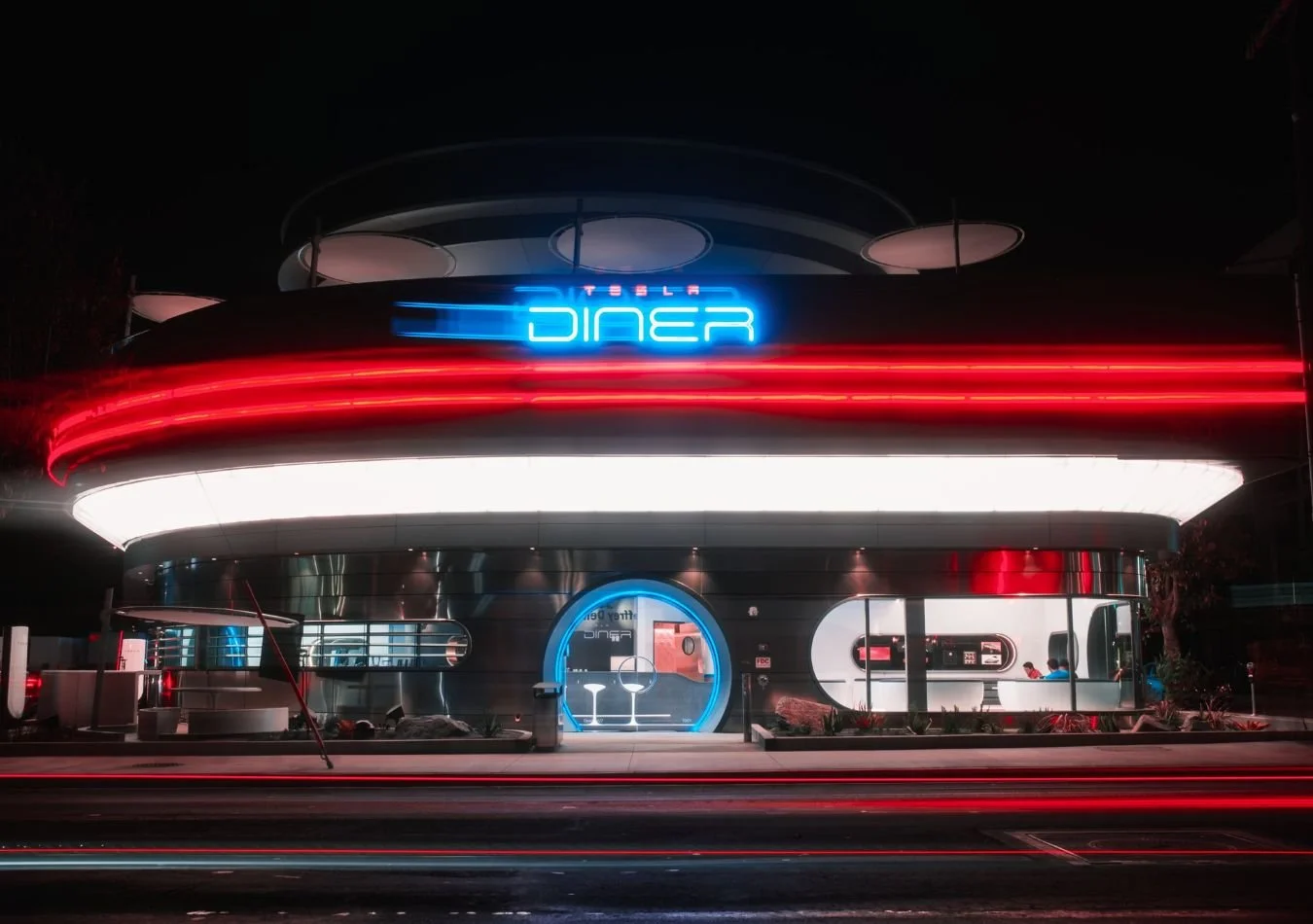
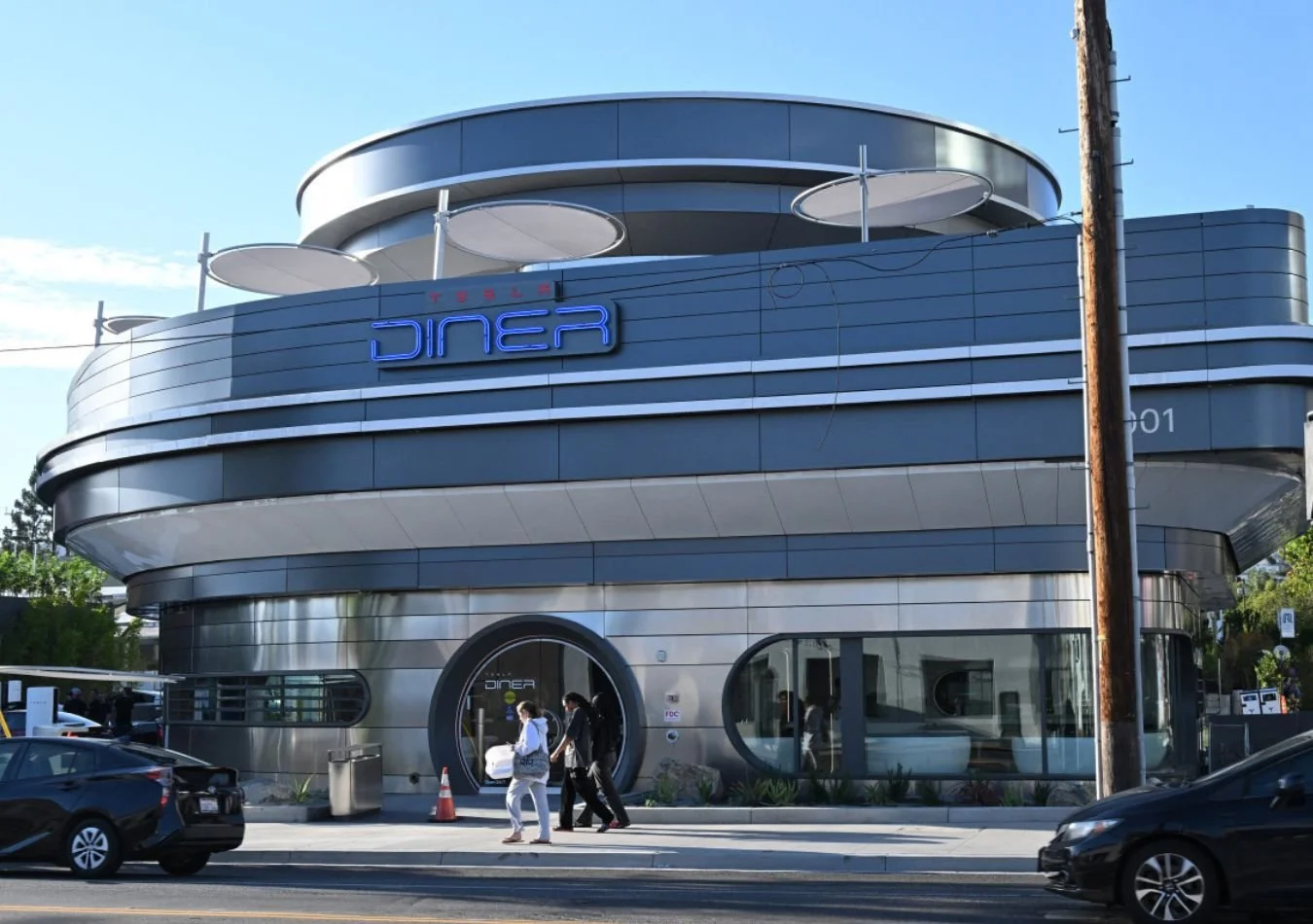
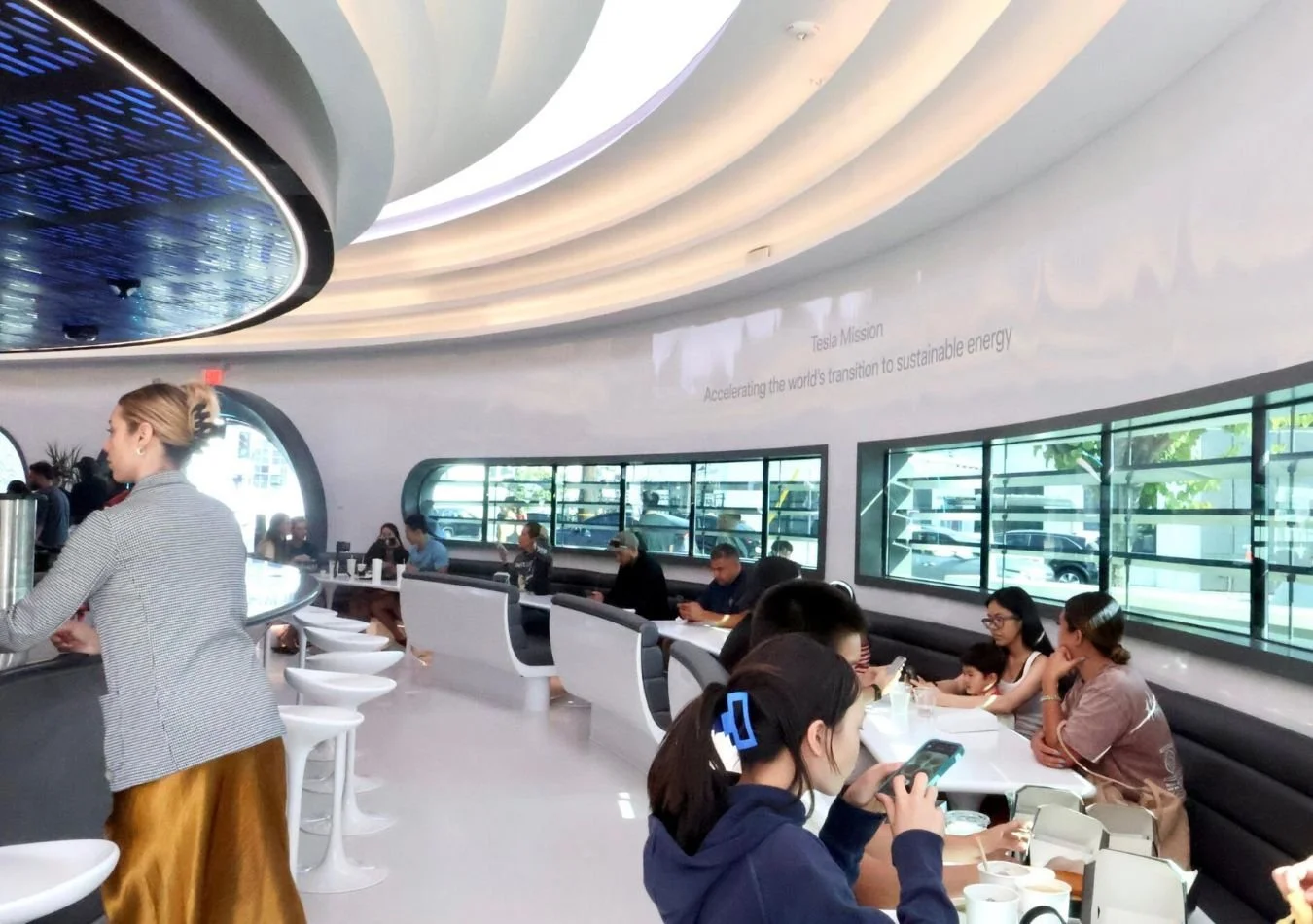
🍔 Branded Burgers and Cyberfries: Tesla’s Diner Doubles Down on Experience-Led Branding

In a surprise move even by Elon Musk’s standards, Tesla has opened a 24-hour diner on Santa Monica Boulevard - complete with roller-skating servers, curated movie clips, robot popcorn, and up to 80 Superchargers. Equal parts roadside attraction and brand experiment, the Tesla Diner is a glossy example of content, commerce, and cultural cachet colliding in physical space.

But beneath the chrome and pie shakes is a strategy that should interest more than EV fans. The diner is a vivid demonstration of what it looks like when a brand designs not just products, but environments - spaces built to immerse people in its worldview.

1753270426015.jpeg
1753270426969.jpeg
1753270426297.jpeg
1753270426660.jpeg
1753270426320.jpeg

📊 Supporting Stats

  • According to Eater, the Tesla Diner is a 3,800 sq ft space with a 5,500 sq ft patio, designed by Stantec and developed with hospitality veteran Bill Chait.

  • The site features up to 80 V4 Supercharger stalls, supporting Tesla’s broader goal of building 1,000+ Supercharger locations in North America by 2025 (Tesla earnings reports).

  • The US experiential marketing industry is projected to reach $62 billion by 2031, growing at 6.3% CAGR (Allied Market Research).

  • A 2023 McKinsey report found that companies leading in brand experience outperformed peers by over 200% in shareholder returns.

✅ Pros - What’s Working?

  • Branded immersion: The diner turns EV charging into a themed brand environment — a place to hang out, not just plug in.

  • High-volume content engine: With Cybertruck burger boxes and LED-lit milkshakes, the entire setup is designed for organic social sharing.

  • Vertical integration: Tesla now owns not just the car and energy, but the downtime too - capturing attention during every stage of the customer journey.

  • Cultural fluency: The blend of retro Americana and sci-fi futurism gives the space a familiar-yet-novel feel, perfect for generating buzz.

❌ Cons - What Are the Limitations?

  • Privacy concerns: The use of geofencing, Bluetooth syncing, and app-based ordering raises questions around data collection and customer consent.

  • Scalability: LA offers a perfect launchpad - but translating this high-concept format to less media-saturated markets may prove difficult.

  • Core distraction: For a company already under scrutiny over delivery numbers and margins, expanding into hospitality could be seen as mission drift.

🚀 Opportunities - What Should Brands Pay Attention To?

  • Experience as media: The diner functions as an Instagram set, a food outlet, a retail hub, and a Supercharger - showing how environments can become multi-format content.

  • Physical extensions of digital brands: Even tech-first companies benefit from real-world spaces that reinforce brand values and spark community.

  • Founder-led storytelling: Musk’s involvement adds cultural gravity - part of a broader trend where the founder becomes the message.

  • Merchandising as engagement: Tesla is experimenting with selling more than cars - branded candy, T-shirts, and limited-edition items become part of the brand touchpoint.

⚠️ Challenges - What Barriers Exist?

  • Sustaining hype: The real test will come when the influencers leave - can Tesla make the diner part of everyday EV life?

  • Over-extension risk: Creating entertainment venues requires operational excellence - something far outside Tesla’s core capabilities.

  • Brand perception: For some, the diner will reinforce Tesla’s innovation edge. For others, it may read as a distraction from quality or safety concerns in its core product lines.

🧠 Key Takeouts

  • Tesla’s diner is less about food, more about feeling - reinforcing the brand through atmosphere, aesthetics, and interaction.

  • Turning infrastructure into entertainment is a powerful model for modern brands.

  • Experiences drive attention, and attention drives content - when designed intentionally.

  • Founder presence continues to shape cultural momentum and audience trust.

  • Strategic real estate can evolve into brand real estate.

categories: Tech, Culture
Wednesday 07.23.25
Posted by Vicky Beercock
 

🎵 Payback Time: UK Songwriters Secure Per Diems in Landmark Label Agreement

A quiet revolution is happening in the music industry - and this time, it's songwriters leading the charge. In what’s being described as a world-first agreement, UK songwriters will now receive £75 per diem plus expenses when attending label-organised writing sessions with the UK's major record labels. Even more significantly, these payments will be non-recoupable.

Why This Matters Now

For decades, songwriters have been the unsung heroes of the music business - crafting chart-topping hits while often working without upfront pay, basic subsistence, or guaranteed income. In the streaming era, where song royalties are split disproportionately, their position has become even more precarious.

This new agreement marks a major shift in how the industry recognises creative labour. Spearheaded by The Ivors Academy, the deal signals a growing momentum behind fairness and financial transparency in music creation.

The Pros - Why This Is a Win

  • Direct support for creative labour: A per diem system, common in film and other production industries, finally acknowledges that creative time has real cost and value.

  • Non-recoupable status: Unlike advances, these payments won’t be clawed back from future royalties - a crucial win for fair compensation.

  • Industry precedent: This is reportedly the first such agreement in the world, setting a new benchmark for other markets and genres.

According to Music Business Worldwide, the initiative was secured through sustained campaigning by songwriter members and advocacy by The Ivors Academy, one of the UK’s leading music rights organisations.

The Cons - What’s Still Lacking

  • Limited scope: At present, the deal only applies to sessions organised by the UK’s three major labels (Universal, Sony, Warner). Independent songwriters or those working outside label frameworks are still without coverage.

  • No fix for streaming: While the per diem offers short-term relief, it doesn’t address the broader structural inequity in streaming revenues, where songwriters often earn far less than performers or labels.

Opportunities - A Door Opens for Broader Reform

  • Setting global standards: This model could be replicated in other countries or by independent labels and publishers.

  • Shifting the power dynamic: By recognising songwriters as workers entitled to fair conditions, the agreement may catalyse wider industry reforms - from session fees to royalty splits.

  • Brand partnerships with values: For agencies and brands working in music, supporting artists and writers with fair pay has become an increasingly important reputational issue.

Challenges - What's in the Way?

  • Implementation logistics: Claims will initially be processed via a temporary system through The Ivors Academy, with a new form in development. Ensuring smooth and consistent payment will be key.

  • Keeping the pressure on: Without continued visibility and union-like organising, such gains can stagnate or be undermined in the long term.

Key Takeouts

  • UK major labels will now provide £75 per diem plus expenses to songwriters for writing sessions.

  • This is a non-recoupable payment - a landmark development.

  • The agreement was secured by The Ivors Academy and its members.

  • It sets a global precedent, though broader systemic issues in streaming remain unresolved.

Next Steps for Brand Marketers

  • Watch how value is shifting: Creators are increasingly organising for fairer conditions. Brands working in music should ensure they’re on the right side of that shift.

  • Consider how you fund creative work: Are freelance writers, composers or designers in your campaigns being treated with the same principles?

  • Support fair culture: If your brand is using music as a marketing vehicle, showing active support for songwriter rights can demonstrate real cultural fluency.

categories: Impact, Music
Wednesday 07.23.25
Posted by Vicky Beercock
 

🧠 Meta’s AI Ads: Scale Without Soul?

Mark Zuckerberg just declared that by 2026, every ad on Meta will be made by AI. A bold claim, and one with serious implications for anyone building brands in an algorithm-driven world.

So, here’s the big question:
If every brand uses the same AI, where does that leave originality, voice, and human nuance?

📊 Supporting Stats

  • Meta currently pulls in $160bn annually from advertising (The Guardian, June 2025).

  • Capital expenditure is set to hit $72bn next year, largely to build out AI infrastructure.

  • News of Meta’s plans saw WPP shares drop 3%, and Publicis Groupe fall by nearly 4%.

  • Meta says the move will “redefine the category of advertising” - shifting from human-crafted strategy to machine-generated execution.

✅ Pros: Automation at Scale

  • Efficiency for SMEs: AI-powered tools lower the barrier to entry for brands with limited resources. Just upload a product shot, set your budget, and Meta does the rest.

  • Rapid testing: Infinite variations of creative and copy, all auto-optimised based on performance.

  • Accessible targeting: Built-in geolocation, dynamic personalisation and budget alignment streamline previously complex media buys.

⚠️ Cons: The Sameness Trap

  • Zero differentiation: If everyone uses the same toolset, creative homogenisation becomes inevitable.

  • Performance ≠ brand equity: AI-optimised ads may deliver short-term clicks, but lack long-term resonance.

  • Commoditised creativity: When platforms decide what “works,” distinctiveness becomes a liability.

🌱 Opportunities: Creator-Led Brand Building

  • Human-first storytelling: In a sea of AI-generated sameness, authentic, founder-led narratives will stand out.

  • Culture as moat: Real voices, faces and values will become key brand assets - not just “nice-to-haves”.

  • Multichannel presence: As Meta ad feeds become flooded with AI output, premium audiences may migrate to platforms like YouTube, podcasts, newsletters, or owned brand spaces.

🧱 Challenges: Platform Dependency

  • No leverage: If your brand lives entirely within Meta’s ecosystem, you play by its rules - and price hikes.

  • Eroding creative control: Automation limits experimentation and lateral thinking - the kind of creativity that builds cult followings.

  • Agencies at risk: While Meta claims to support agencies, full-stack automation threatens their core value proposition.

💡 Key Takeouts

  • AI-generated ads will dominate Meta by 2026.

  • Creative optimisation will favour performance over personality.

  • Mass automation risks mass commodification.

  • Brands need human stories to stay culturally relevant.

  • Creator-led brands offer a viable, defensible alternative.

🚀 Next Steps for Brand Marketers

  • Double down on brand identity. Invest in the human, the founder, the creator behind your product.

  • Build outside the feed. Explore YouTube, podcasts, brand communities, and direct channels where storytelling still matters.

  • Audit your dependence. If Meta flipped a switch tomorrow, would your brand still have a voice?

  • Champion cultural fluency. AI can’t read the room - but your team can.

  • Use AI selectively. Let machines handle the grunt work, but protect the soul of your brand at all costs.

The AI ad age is coming. The only way to win?
Stay human.

categories: Impact, Tech
Wednesday 07.23.25
Posted by Vicky Beercock
 

🧒🤖 Baby Grok: What Kid-Friendly AI Signals About the Future of Childhood Tech

Elon Musk’s xAI has announced Baby Grok, a child-focused version of its AI chatbot platform. Positioned as a safer, simplified alternative to the edgier mainline Grok product, Baby Grok promises only “kid-friendly content”. The move follows recent controversy over hyper-customisable 3D AI companions - some of which were criticised for being overly sexualised.

With increasing scrutiny over how AI shapes young minds, Baby Grok arrives at a cultural flashpoint. It’s not just a product announcement, but a signal of the growing urgency to define ethical, educational, and emotional standards for how AI engages children.

Why This Matters

AI is no longer confined to adult productivity tools. It’s embedded in homes, classrooms, and now, potentially, the early digital experiences of kids. According to Ofcom (2024), 56% of UK children aged 8-11 own a smartphone. And one in three children aged 12-15 uses generative AI tools regularly (Children’s Commissioner for England, 2024). This trend raises pressing questions about content moderation, bias, emotional development, and long-term cognitive effects.

At the same time, reports like Voice of the Boys from Male Allies UK spotlight how young people are already grappling with darker tech-driven narratives: boys describing choking as normal, joking about nudify apps, or comparing AI girlfriends as a form of social status. These aren’t fringe behaviours - they’re evidence of a growing disconnect between digital design and developmental safeguarding.

Key Concerns and Watchouts

  • Lack of Transparency: Beyond the “kid-friendly” label, xAI has offered little clarity on what safety architecture, content controls, or ethical oversight will differentiate Baby Grok from its mainline counterpart.

  • Brand Trust Gap: Grok is known for its uncensored tone and sometimes controversial content. The pivot to child-safe AI invites scrutiny - especially from parents, educators, and child safety advocates.

  • Regulatory Grey Zones: Existing frameworks like the UK’s Online Safety Act are still catching up with the realities of generative AI. This leaves open questions about data collection, content monitoring, and age verification in platforms like Baby Grok.

  • Commercialisation of Childhood: By introducing AI companions into children's lives, even with the best intentions, there's a risk of deepening tech dependency and shifting play or learning into commercialised, screen-based domains.

  • Moral Delegation to Machines: There’s a broader ethical issue around offloading parental, educational, or emotional support roles to AI. No matter how well-designed, chatbots can't replace nuanced human interaction - especially in formative years.

As AI expands its reach into childhood, the conversation around safety needs to evolve from technical compliance to cultural responsibility. The launch of Baby Grok is not just a product test - it’s a societal one. Whether it becomes a meaningful educational tool or another cautionary tale will depend not just on xAI, but on how regulators, brands, educators, and parents choose to respond.

categories: Impact, Tech
Wednesday 07.23.25
Posted by Vicky Beercock
 

🎭 Jordan Goes Broadway: The Air Jordan 40 Launch That Sang Its Legacy

To mark 40 years of the Air Jordan line, Jordan Brand didn’t just drop a new sneaker - it dropped a full-scale musical. “Too Easy”, created by long-time creative partner Wieden+Kennedy, flips a black-and-white basketball court into a full-colour stage, with NBA and WNBA stars delivering lyrics about rejection, injury, and ambition. The timing is bold - Jordan Brand revenue doubled between 2020 and 2024, before a 16% decline in the most recent fiscal year. This campaign feels both celebratory and recalibrative.

Contextual Stats & Market Position

  • Nike’s footwear dominance is easing: Global sports footwear market share decreased from 28.8% in 2021 to 26.3% in 2024, reflecting stronger competition from brands like On and Hoka

  • Nike still leads overall apparel/footwear: While Nike remains the largest sportswear company, its share dip highlights increasing market pressure

  • Gen Z demands culture and authenticity:

    • 67% of Gen Z are more loyal to brands that speak openly on social issues

    • 54% want behind‑the‑scenes content, and 2.2× trust brands collaborating with familiar creators rather than celebrities

    • 76% use TikTok for humour and light content, while 73% prefer short‑form videos to learn about new products

    • 51% of Gen Z prioritise socially responsible companies when choosing what to buy

Cultural Relevance & the Power of Storytelling

The “Too Easy” campaign implicitly addresses this new consumer mindset:

  • It creates immersive, narrative‑driven content that meets Gen Z’s appetite for story arc, theatrics, and emotional impact.

  • By featuring both NBA and WNBA stars, the campaign aligns with Gen Z values of inclusivity and representation.

  • The theatrical format and musical framing tap into “brand lore”, a growing trend among digital‑native audiences

Key Takeouts

  • Nike holds its position but faces clear challenges: share has declined amid rising competition and softer growth in key segments like women’s footwear

  • Gen Z loyalty is now earned through authentic storytelling, social consciousness, and creator‑aligned content

  • Jordan Brand’s theatrical campaign builds narrative depth, expands cultural resonance, and plays to Nike’s heritage of bold creative decisions.

categories: Sport, Fashion, Culture
Wednesday 07.23.25
Posted by Vicky Beercock
 

🏗️ Wimbledon’s Green Light: What the Expansion Ruling Means for Brands, Culture & Community Spaces

The All England Club has cleared a major legal hurdle in its controversial plan to expand the Wimbledon tennis site - a decision that could reshape not only the famous tournament but also how brands, developers and planners approach protected land in urban areas. Following a High Court ruling, 38 new courts and an 8,000-seat stadium will now be built on the former Wimbledon Park Golf Club site.

As campaigners vow to continue legal opposition, this moment offers more than a property development story. It raises deeper questions about the balance between legacy, access, commercial ambition and environmental responsibility - all of which brand strategists should be watching closely.

📊 Supporting Stats

  • The £200 million expansion will nearly triple the site’s size, from 42 to 115 acres (source: All England Club).

  • 27 acres of new public parkland will be created on land that was previously private (source: AELTC).

  • 75% of Londoners believe green space is “very important” to their mental wellbeing, according to the Greater London Authority (GLA).

  • Nearly 1,000 formal objections were submitted to Merton Council during public consultations on the proposal (source: BBC).

✅ Pros - What’s Working?

Public Access & Community Benefit
The All England Club has pledged to open up 27 acres of new parkland for public use - a rare increase in green access in a city where open space is at a premium.

Major Event Legacy
Creating a permanent home for Wimbledon’s qualifying rounds consolidates the tournament on one campus and strengthens its global prestige.

Boost to Local Economy & Cultural Infrastructure
An expanded site means longer visitor stays, more job creation and additional year-round use of the space. It supports London’s position as a premier destination for global sports events.

⚠️ Cons - What Are the Limitations?

Heritage and Environmental Concerns
Wimbledon Park is a Grade II*-listed landscape originally designed by Capability Brown. Campaigners argue the development risks irreversible harm to a rare piece of urban heritage.

Precedent for Protected Land
Critics warn that if this ruling stands, it may weaken protections for other greenbelt and community-owned spaces, encouraging more commercial encroachment.

Divided Public Opinion
Despite the promises of new parkland, many locals and environmental groups feel the trade-off isn’t worth the loss of heritage and tranquillity.

🌱 Opportunities - What Should Brands Watch?

Designing with Legacy in Mind
There’s an opportunity for the All England Club to set a gold standard in landscape-sensitive design - creating a masterclass in blending sport, culture and conservation.

Public Access as a Brand Asset
Offering genuinely inclusive public space is no longer a nice-to-have. It’s a reputational cornerstone. Brands can learn from how access, visibility and shared value will be framed here.

New Sponsorship & Experience Ecosystems
The expansion opens up new possibilities for brand activations, community engagement and year-round cultural programming tied to the Wimbledon brand.

🧱 Challenges - What Barriers Remain?

Ongoing Legal Risks
A separate High Court case in January 2026 will determine whether a statutory trust over the land legally blocks the development. Until then, uncertainty remains.

Community Trust & Transparency
Brands involved must tread carefully. The tension between local campaigners and large institutions like the GLA or AELTC reveals a trust gap that can’t be ignored.

Environmental Performance Scrutiny
As the climate agenda sharpens, the project’s environmental credentials - from biodiversity to building impact - will come under intense scrutiny.

📝 Key Takeouts

  • Wimbledon’s expansion has passed a major planning hurdle but faces continued legal challenge.

  • The scheme offers a rare case study in turning a private site into public-facing green space.

  • Heritage and environmental concerns highlight growing tensions between development and protection.

  • The ruling may shape how public land use is interpreted in future cultural and commercial projects.

categories: Sport
Wednesday 07.23.25
Posted by Vicky Beercock
 

On The Record Linkedin Newsletter 23rd July

categories: Linkedin Newsletter
Tuesday 07.22.25
Posted by Vicky Beercock
 

🧠⚽ Football on Prescription? Tackling Depression Through Community, Not Pills

A groundbreaking new initiative in Gloucestershire is rewriting the rulebook on mental health support. Instead of antidepressants, some patients experiencing mild to moderate depression will be offered a prescription for something unexpected: live football. Launched by Labour MP and former GP Dr Simon Opher, in collaboration with Ecotricity founder Dale Vince, the scheme allows patients to attend matches at Forest Green Rovers - a club known for its eco credentials and deep community roots. It’s a bold move, with timely implications for how the UK approaches mental wellbeing.

Dr Opher, who has long advocated for social prescribing as a clinical tool, previously offered alternatives like gardening and stand-up comedy. His approach is rooted in the idea that loneliness and disconnection are core drivers of low mood - and that reconnecting people with social spaces is a critical intervention. “It’s really quite toxic,” he says of modern isolation. “You can quantify it - it’s the same health risk as smoking about 20 cigarettes a day.”

This latest intervention, which will run across twelve GP surgeries near Forest Green’s stadium in Nailsworth, offers free matchday tickets as a way to stimulate connection, routine and joy. The idea isn’t that football is a universal cure, but rather that it’s one more option in a toolkit that moves beyond pharmaceuticals. As Dr Opher notes, “Football isn’t going to be for everyone. Nothing is, but we need a range of options.”

He also raises concerns over the scale of antidepressant use in England, with 8.7 million people currently on prescriptions - a figure that rose by 2.1% last year alone. For many of those with mild to moderate symptoms, antidepressants may offer limited benefit, especially in the absence of broader social or psychological support. “Quite a few of them would just come back no better,” he reflects on his early days as a GP. “I thought we needed to try something different.”

Forest Green Rovers, known as the world’s first vegan and carbon-neutral football club, are providing the tickets free of charge. The club has become a symbol of alternative thinking in the football world - making it a fitting host for a health scheme built on rethinking the norm.

As the pilot launches this August, questions remain around long-term effectiveness, scalability, and how such schemes might fit into wider NHS strategy. But what’s clear is this: mental health support in the UK is evolving. And sometimes, the way forward starts with a roar from the stands.

categories: Impact, Sport
Monday 07.21.25
Posted by Vicky Beercock
 

🕵️‍♂️ Algorithm Anxiety: Why France’s Criminal Probe into X Should Be on Every Brand’s Radar

In the crosshairs of European regulation, X’s standoff with French authorities is more than a legal spat - it’s a warning shot to every platform that trades in influence.

French prosecutors have launched a criminal investigation into Elon Musk’s X (formerly Twitter), probing alleged algorithmic manipulation aimed at foreign interference. The platform’s refusal to comply with demands for algorithmic transparency, citing free speech concerns and alleged bias, has escalated tensions. This isn’t just a national legal issue - it’s a flashpoint in the global debate over platform governance, data sovereignty, and brand risk in politicised digital spaces.

📊 The Stats Behind the Scrutiny

  • 73% of EU citizens worry about misinformation online, with social platforms seen as major sources (Eurobarometer, 2024).

  • Under the Digital Services Act (DSA), platforms like X must disclose algorithmic functions and content moderation practices to regulators.

  • France’s media regulator ARCOM has already flagged X for “major shortfalls” in combating hate speech under DSA mandates.

These figures underscore why European regulators are sharpening their tools - and why platforms resisting scrutiny risk reputational and legal backlash.

✅ Pros - Why This Matters for Brand Strategy

  • Increased transparency mandates could ultimately restore trust in digital platforms, especially for brands seeking safer media environments.

  • X’s high-profile refusal to hand over data highlights a growing demand for algorithmic accountability, which could pave the way for industry-wide standards.

  • The confrontation brings regulatory clarity to grey areas around AI-powered content curation and its potential political impact.

⚠️ Cons - Platform Tensions & Risk Exposure

  • Musk’s X has already seen major advertiser exodus due to concerns over content moderation. This standoff could deepen brand safety risks.

  • Regulatory non-compliance puts platforms at risk of hefty fines or service limitations in key markets, threatening access and reach.

  • Allegations of “foreign interference” and algorithmic bias risk fuelling public distrust, affecting brand affinity by association.

🌍 Opportunities - Strategic Openings for Marketers

  • Brands can lead by investing in transparency-first media buying, favouring platforms that submit to independent algorithmic audits.

  • The moment is ripe for developing alternative content strategies, including partnerships with verified publishers and decentralised platforms.

  • Rising concern over digital influence opens space for values-led campaigns around truth, trust, and data ethics.

🧱 Challenges - Friction Ahead

  • Opaque algorithms remain a black box for most marketers, making it difficult to assess true audience reach or engagement dynamics.

  • Regulatory fragmentation across the EU and US complicates compliance planning, especially for global campaigns.

  • The politicisation of platform governance threatens to drag brands into cultural flashpoints, whether they intend to engage or not.

🔑 Key Takeouts

  • X’s resistance marks a growing divide between platform self-governance and state regulation.

  • Regulatory bodies like the EU are moving from passive oversight to active enforcement, including criminal probes.

  • Algorithmic transparency is no longer optional - it’s becoming a central trust factor in media planning.

  • Brands face reputational risks by operating in opaque digital environments lacking clear governance standards.

📌 Next Steps for Brand Marketers

  1. Audit your media mix for exposure to high-risk platforms facing regulatory heat.

  2. Start asking vendors for algorithmic transparency reports or third-party verification.

  3. Build resilience by diversifying into contextual advertising and trusted news environments.

  4. Stay informed on regulatory developments in key markets - particularly around the Digital Services Act.

  5. Prepare your comms team for potential spillover risks from platform controversies.

categories: Tech
Monday 07.21.25
Posted by Vicky Beercock
 

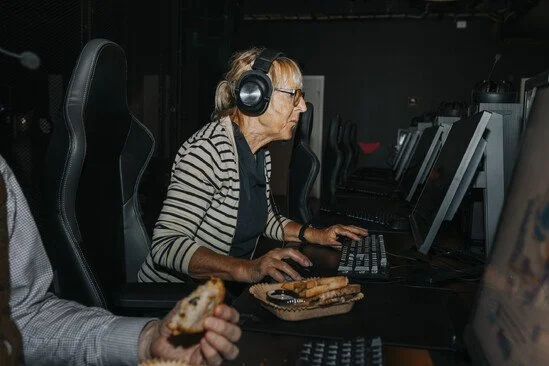
🎮 Gaming Isn’t Just for Gen Z: Why Gen X and Boomers Are Leveling Up

Once seen as the domain of teenagers and twenty-somethings, gaming has evolved into a cross-generational powerhouse. Today, it’s not unusual to find 50-somethings streaming on Twitch or grandparents playing puzzle games on tablets. For brand marketers still stuck in the “Gen Z = gamer” mindset, it’s time to reset. Gaming is now a full-household channel, with significant implications for reach, resonance and media planning.

The Stats Speak Loudly

Gaming participation is up across older demographics:

  • Nearly 60% of UK adults aged 45-54 played video games in 2023 (Statista) - up from 43% in 2013

  • 41% of adults aged 55-64 are gamers

  • 25% of over-65s now game regularly

  • 32% of Europeans aged 45-64 play video games (Statista, 2024)

  • In the US, 87% of Gen X and 81% of Boomers & Seniors game on mobile weekly (ESA, Essential Facts 2025)

  • 205 million Americans play weekly across mobile, console and PC (ESA, 2025)

Pros - What’s Working?

  • Massive mobile reach: Older adults over-index on mobile platforms, making it the most accessible gaming format.

  • Health and wellbeing benefits: Games are increasingly used for cognitive stimulation, memory retention and social engagement among older players.

  • Community building: Platforms like YouTube Gaming and Twitch are home to older creators who build sizeable, loyal followings.

  • Diversified content: Casual, puzzle, and story-driven games appeal more to older audiences, expanding the creative brief for marketers.

Cons - What Are the Limitations?

  • Persistent stereotypes: Many marketers still associate gaming primarily with youth culture, undercutting media strategy relevance.

  • Creative blind spots: Older audiences may be missed in game-based advertising due to assumptions about platform use or content fit.

  • Data visibility: Audience segmentation tools often default to younger demos, making it harder to extract insight from older gamer behaviours.

Opportunities - What Should Brands Explore?

  • Intergenerational storytelling: Campaigns that reflect gaming as a shared household activity, not a generational silo.

  • Product placement in casual games: Older gamers are highly active in puzzle and word games - prime spots for brand visibility.

  • Wellness-focused content: Games designed with mindfulness, cognitive health or social connection can drive brand equity in ageing populations.

  • Creator partnerships beyond Gen Z: Influencers in their 40s, 50s and 60s are building followings. Brands that engage them signal inclusivity and relevance.

Challenges - What Barriers Exist?

  • Measurement gaps: Traditional ad metrics don’t always reflect nuanced usage across devices or generations.

  • Cultural bias in strategy: Youth-oriented brand teams may miss opportunities due to lack of cultural empathy with older audiences.

  • Fragmented platforms: Older gamers may prefer less social or more niche gaming environments, complicating channel planning.

Key Takeouts

  • Gaming is no longer youth-exclusive - it’s a cross-generational media channel with mass reach.

  • Older adults are gaming frequently, especially on mobile, and they are open to branded engagement.

  • Stereotypes about who games - and how – are holding brands back.

  • Opportunities lie in wellness, community, and casual game integration.

Next Steps for Brand Marketers

  • Audit your gaming assumptions: Is your current strategy over-indexed on Gen Z? If so, it’s time to rebalance.

  • Brief for mobile-first, cross-generational reach: Design creative that appeals across age groups, especially Gen X and Boomers.

  • Invest in creator diversity: Partner with older influencers to expand representation and relevance.

  • Explore new formats: Think beyond traditional console tie-ins – mobile and casual games are where older gamers thrive.

  • Champion inclusive design: Ensure your game-related content or ad placements are accessible, age-agnostic, and relevant to all players.

Want to reach everyone? Start with gaming. It's not fringe - it's foundational.

categories: Gaming
Monday 07.21.25
Posted by Vicky Beercock
 

🇨🇭 Euro 2025: Women’s Football Delivers a Tourism Windfall for Switzerland

The UEFA Women’s Euro 2025 is turning out to be more than a sporting event - it’s proving a powerful catalyst for tourism, retail, and national visibility in Switzerland. As the group stages wrap, early indicators point to a transformative moment not just for women’s football but for the broader cultural economy of the host nation.

Women’s Football as an Economic Engine

According to Visa data shared with CNBC, Switzerland saw a 12% year-on-year increase in visitor numbers during the first week of the tournament. Most significantly, fans from Germany, Poland, and the Netherlands led with a 25% increase, while UK visitors rose 20% and those from Italy and France followed with 15% and 10% increases respectively.

Consumer spending across Swiss host cities spiked 27%, with retail sales alone up 30%. Cities like Bern and Thun reported nearly double restaurant and entertainment revenues. It’s a surge that underscores the multiplier effect of major women's sporting events - one that cities and marketers should not ignore.

📊 Supporting Stats

  • 600,000+ advance tickets sold, with 35% purchased by international visitors (UEFA)

  • 22 out of 24 group-stage matches sold out

  • Visitor spending rose 25% in key host towns like Thun (Visa via CNBC)

  • Euro 2022 saw global TV viewership reach 365 million, up from 178 million in 2017 (UEFA)

Changing Perceptions, Shaping Culture

For years, packed stadiums for women’s football seemed unlikely. But Euro 2025 builds on the momentum of Euro 2022 in England, which saw landmark achievements in audience numbers, media visibility, and commercial value. The current tournament has amplified those gains, with supporters travelling from 114 countries and matches drawing sold-out crowds.

UEFA’s Nadine Kessler highlighted that over 61,000 Germans, 41,000 English, and thousands more from the US, France, and the Netherlands have travelled to Switzerland - a figure that underscores women’s football’s growing global appeal.

Fans and stakeholders report strong local engagement in cities like Lucerne, where the tournament’s branding and energy permeated daily life. In contrast, cities like Geneva showed a more muted atmosphere earlier in the group stage, suggesting varying levels of local integration.

Still, the atmosphere around the event has been praised for its inclusivity, family appeal, and community spirit - traits that differentiate it from the male-dominated football experience and present a fresh proposition for brands and tourism boards alike.

📝 Key Takeouts

  • Euro 2025 is already a tourism and commercial success for Switzerland, driven by women’s football’s global momentum.

  • The economic impact is tangible: +12% visitors and +27% consumer spend in just one week.

  • Fan experience and civic participation differ across host cities, highlighting the importance of local activation.

  • Long-term value will depend on legacy planning, from grassroots investment to tourism brand-building.

Women’s football continues to redefine expectations. With the right vision, it can do the same for national brands, cities, and economies.

categories: Impact, Sport
Monday 07.21.25
Posted by Vicky Beercock
 

⚽️📱 Beyond the Statement: Why Football Is Still Failing Players Like Jess Carter on Online Abuse

When Jess Carter stepped onto the pitch during the Women’s EUROs, she represented the future of football: world-class, proudly Black, openly gay. But once again, her success was met with a wave of online racial abuse. The response? Familiar statements, fleeting outrage – then silence.

As someone who led internal reform efforts at a Championship club, I’ve seen how deeply broken the system is. Clubs, leagues and platforms talk a good game. But when it comes to player protection, safeguarding and accountability, the infrastructure just doesn’t exist.

📊 The Scale of the Problem: Discrimination Is Rising, Not Falling

The 2023/24 season marked a record high in reported discrimination across football:

  • 1,332 reports of discriminatory behaviour were made to Kick It Out - a 32% increase year on year

  • Racist abuse rose 47%, from 496 to 731 cases, making it the most reported form of discrimination.

  • Player-specific abuse rose 43%, from 277 to 395 cases in the professional game.

  • Reports of online abuse more than doubled, from 281 to 589 cases.

  • Players of East and South-East Asian heritage were disproportionately affected, accounting for over 55% of targeted racist incidents in the pro game.

This is evidence that despite years of campaigns and hashtags, the sport is becoming less safe for many players  -  especially online.

⚙️ The Current Setup: Who Holds Responsibility?

Clubs and Leagues

While individual clubs issue public statements and occasionally report abuse, there are:

  • No mandatory standards for digital safeguarding.

  • No enforced training or escalation protocols.

  • No consistent player support beyond basic wellbeing provision.

In my time at a Championship club, we attempted to build better reporting pathways and player support, but there was no structural guidance from the league. Responsibility sat with individuals, not systems.

Leagues (FA, Premier League, EFL)

The leagues remain heavily invested in PR-driven campaigns like Kick It Out and No Room for Racism. These raise visibility, but they:

  • Lack enforcement power.

  • Do not publish club compliance data.

  • Have no framework for holding clubs accountable for repeated inaction.

Police

Policing of online hate is sparse. With matchday costs already contentious - many forces now ask Premier League clubs to cover a greater share - online enforcement drops down the list. Unless there’s a direct physical threat, police are unlikely to pursue online abuse, especially when perpetrators are anonymous or based overseas.

Social Media Platforms

Despite the Online Safety Act (2023), platforms continue to:

  • Allow anonymous users to target players with minimal moderation.

  • Delay or ignore takedown requests.

  • Withhold data that could support law enforcement action.

Even when clubs escalate serious abuse, there’s often no response unless the issue goes public.

🧱 Structural Challenges: Why the System Doesn’t Work

  • No central accountability: No body has both the mandate and the power to enforce protection for players.

  • Platforms profit from engagement: Hate still drives traffic. There’s little financial incentive to act.

  • Cross-jurisdictional barriers: Online abuse is global. Enforcement is not.

  • Inconsistent club appetite: Many clubs lack the infrastructure, leadership or pressure to act decisively.

  • Legislative lag: While the Online Safety Act is a step forward, it wasn’t designed with athletes in mind.

⚖️ The Online Safety Act: Progress, But Limited

The Online Safety Act (2023) introduces Ofcom regulation and fines for platforms failing to prevent illegal content. It’s a significant policy milestone, but:

What it might achieve:

  • Greater platform transparency and reporting.

  • Fines for non-compliance.

  • Strengthened moderation standards for all users.

What it won’t fix:

  • There’s no athlete-specific protection or escalation channel.

  • It doesn’t mandate real-time moderation during live sporting events.

  • It doesn't force platforms to verify accounts or share user data with clubs or leagues.

Without targeted provisions for high-risk groups like footballers, the act remains a blunt tool.

✅ What Needs to Be Done: A Clear Action Plan

To protect players and rebuild trust, football must move from awareness to enforcement. Here’s what that requires:

1. Create a Central Abuse Monitoring and Response Body

  • Independent from clubs and leagues, with powers to escalate abuse cases to platforms and police.

  • Provide real-time support to affected players.

  • Publicly report trends and platform accountability.

2. Mandate Safeguarding Standards for All Clubs

  • Minimum standards for online abuse monitoring, reporting and player care.

  • Built into club licensing agreements.

  • Regular audits, with non-compliance linked to financial penalties.

3. Reform Platform Policy

  • Mandatory ID verification for users interacting with verified accounts.

  • Permanent bans for repeat offenders.

  • Real-time reporting and takedown mechanisms for athletes under attack.

4. Enhance Police and Legal Infrastructure

  • Fund specialist online hate units with football-focused expertise.

  • Require social platforms to share user data under streamlined legal processes.

  • Hold top-tier clubs accountable for funding part of this work.

5. Amend the Online Safety Act

  • Recognise elite athletes as a defined “at-risk group”.

  • Introduce enhanced protections, takedown speeds and support services.

🎯 Final Word: Statements Are Not Protection. Systems Are.

Jess Carter should never have to trade visibility for vulnerability. And players shouldn’t have to rely on public outrage to trigger action.

From my own experience inside a Championship club, I can tell you: the appetite to tackle this issue exists on the ground. But without clear standards, funding and accountability, it remains piecemeal and unsustainable.

Football has the money. Social media platforms have the tools. The law is starting to catch up. Now we need leadership - not from players, but from those paid to protect them.

No more statements. It’s time for structural change.

categories: Impact, Sport
Monday 07.21.25
Posted by Vicky Beercock
 

🎥 Google Goes Hollywood: What 100 Zeros Means for the Future of Tech and Entertainment

Google is officially stepping into the spotlight. With the launch of 100 Zeros - a new entertainment venture in collaboration with Range Media Partners - the tech giant is making a concerted effort to reshape how technology is portrayed in mainstream entertainment. The aim? To move away from dystopian narratives and toward more hopeful, culturally relevant stories centred on AI, spatial computing, and emerging tech.

Rather than producing content in-house or via YouTube, 100 Zeros will co-finance and co-develop projects with established streamers like Netflix, Amazon, and Apple TV+. This strategic move signals a shift in how Silicon Valley wants to influence culture: not just through product, but through story.

What’s Working: A More Nuanced Tech Narrative

Google's timing is smart. Public perceptions of AI are swinging between wonder and worry. According to a 2024 Pew Research report, 52% of Americans feel more concerned than excited about AI. In the UK, Ofcom's 2023 Media Nations report highlighted growing demand for content that explores ethical and human-centred aspects of technology. By investing in storytelling that reflects nuance and optimism, Google is positioning itself as a values-led innovator.

Limitations: Brand Distance and Creative Control

Google isn't producing its own shows - it's aligning with third-party creatives. That means reduced control over final messaging and potential tension between brand goals and artistic integrity. There’s also the risk of audiences perceiving this as soft PR rather than genuine cultural investment, especially if narratives feel overly polished or didactic.

Opportunities: Brand Building Through Storytelling

Done well, this could help reposition Google as not just a tech enabler, but a cultural thought leader. There’s significant upside in embedding brand values in entertainment without overt branding. Think: what Nike did with sport documentaries or Apple’s subtle product integration across original content. With talent access via Range Media and scale via partnerships with top streamers, Google is well-placed to influence the next wave of tech narratives.

Challenges: A Distrustful Audience

Audiences are increasingly sceptical of Big Tech. Edelman’s 2024 Trust Barometer shows trust in technology has declined for the third consecutive year globally. This means 100 Zeros must earn attention and respect on creative merit - not corporate association. The risk of backlash is real if content is perceived as sanitised or self-serving.

🔑 Key Takeouts:

  • Google’s 100 Zeros is a strategic move to influence tech narratives via film and TV.

  • It reflects a shift toward values-based storytelling focused on optimism, not dystopia.

  • The venture offers cultural influence potential but carries reputational risk.

  • Success hinges on creative authenticity, not corporate messaging.

categories: Tech
Monday 07.21.25
Posted by Vicky Beercock
 

🎶 TikTok Turns Up the Volume on Songwriters: What the New Features Mean for Brands and Creators

As TikTok continues to shape global music discovery, its latest move puts songwriters centre stage. With the beta launch of TikTok Songwriter Features, the platform is responding to industry calls for greater transparency, visibility and value for the creators behind the hits. For brands, talent managers, and cultural strategists, this development signals a shift in how music creators can be engaged and elevated in the social ecosystem.

Why This Matters Now

TikTok has become a core driver of music virality. But until now, songwriters have often remained in the background. This new suite of features - including a Songwriter Account Label and a Music Tab - is designed to ensure their work is properly credited and more discoverable.

According to MIDiA Research’s 2025 Songwriter Report, 53% of full-time songwriters who post content do so on TikTok, and over 80% of all songwriters use social media to advance their careers. The timing is clear: songwriter visibility is no longer optional - it’s business-critical.

✅ Pros - What’s Working?

Elevated Attribution
For the first time, songwriters can label their profiles and curate a music tab showcasing their co-written works, making authorship transparent and accessible.

Content + Catalogue Integration
TikTok’s update places music and storytelling side by side - empowering songwriters to link personal content with professional catalogues.

Direct Fan Discovery
As songwriter KOLE notes, fans are discovering creators through TikTok’s algorithmic curation - not by search. That passive discovery makes songwriter visibility more impactful than ever.

Industry Endorsement
Major publishers like Kobalt, Reservoir, Warner Chappell and Sentric have publicly backed the beta, reinforcing its industry legitimacy and reach.

❌ Cons - What Are the Limitations?

Closed Beta = Limited Access
Currently, the feature is in a restricted rollout with select publishing partners. This limits early visibility for independent or unsigned songwriters.

Attribution Is Still Optional
TikTok’s features are tools, not enforcement mechanisms. Unless widely adopted and standardised, songwriter credits may still be missed or inconsistent.

Monetisation Still Vague
While the features improve discovery, the connection to revenue (e.g. sync, streaming boosts, licensing) is still unclear for many songwriters.

💡 Opportunities - What Should Brands Pay Attention To?

Creator Collaborations at the Source
Brands can now identify not just performers, but the creative minds behind trending tracks - opening doors to deeper, story-led partnerships with writers.

Content Series Like #BehindTheSong
TikTok’s built-in storytelling formats like #BehindTheSong offer a blueprint for branded content collaborations focused on process, inspiration and authorship.

Talent Scouting Through Attribution
With credits attached to profiles, brands and agencies can scout songwriting talent based on real metrics - discoverability, influence, and song virality.

Culture-Led Campaign Soundtracking
Knowing who wrote a viral track opens up richer cultural alignment and licensing conversations, beyond performer endorsements.

⚠️ Challenges - What Barriers Exist?

Fragmented Credit Systems Across Platforms
TikTok may credit songwriters, but many DSPs and UGC platforms still lack consistent metadata frameworks.

Algorithmic Attention Gaps
TikTok’s For You Page surfaces content, not necessarily credit. Without amplification, songwriter features risk being underused or unseen.

Platform Dependency
Over-reliance on TikTok for visibility may reinforce platform-driven career models, which can be unstable or opaque.

🔑 Key Takeouts

  • TikTok Songwriter Features signal a shift towards greater attribution and visibility for music creators.

  • The initiative is backed by major publishers and supported by songwriter advocates across the industry.

  • While still in beta, the features could reshape how songwriters are discovered, credited, and monetised on social platforms.

  • Brand marketers now have a new layer of creative partnership potential, tracing culture back to its originators.

  • Success will depend on widespread adoption, feature evolution, and cross-platform alignment on credit standards.

🧭 Next Steps for Brand Marketers

  • Track the Beta Rollout: Stay informed on when the features open more broadly. Early engagement could offer brand partnership advantages.

  • Map Songwriters to Cultural Trends: Go beyond performers. Identify the creatives behind trending TikTok tracks who may align with your brand story.

  • Experiment with #BehindTheSong Formats: Use TikTok’s existing campaign structures to spotlight the creative journey behind licensed music in brand campaigns.

  • Push for Metadata Standards: Join or support industry calls for consistent songwriter crediting across digital platforms.

  • Reframe Influencer Strategy: Include songwriters as a new class of cultural creators for endorsement, partnership or amplification.

TikTok is positioning songwriters not just as background contributors, but as cultural figures in their own right. For brands, that means a chance to engage deeper in the music economy - at the source of creativity.

categories: Music, Tech
Thursday 07.17.25
Posted by Vicky Beercock
 

🧨 Fyre Festival Sale: What’s the Real Price of a Tarnished Brand?

🔥 Congratulations, You Bought a Fyre! (Now What?)
How a Disaster Festival Became the World’s Most Expensive Meme - and What Its New Owner Might Actually Do With It

Introduction
Remember Fyre Festival? That glittering influencer fantasy that turned into a slow-burn survival thriller shot entirely in Instagram aspect ratio? Well, it just sold on eBay. For $245,300.

Billy McFarland - the man who turned Evian water into a logistical crisis and cheese sandwiches into a class-action exhibit - auctioned off the rights to the Fyre brand. Yes, someone voluntarily paid nearly a quarter of a million dollars for a pile of broken promises, unkept NDAs, and a logo that smells faintly of damp plywood.

💥 How Bad Was It, Really?

Let’s recap, in case you’ve managed to forget the best-worst event of the last decade:

  • Guests were promised private jets, luxury villas, and VIP yacht parties.

  • They received hurricane-relief tents, feral dogs, and portaloos from a Mad Max reboot.

  • Luggage was tossed out of shipping containers like bingo prizes.

  • Gourmet catering turned out to be two slices of bread + one plastic cheese single = dinner.

  • Thousands were stranded on an island with no electricity, no running water, and no explanation.

  • The only thing that showed up reliably? The influencers’ phone batteries.

And let’s not forget the launch video, which broke the one (one!) rule of using the island: “Don’t mention Pablo Escobar.” They did. In the first five seconds. The sellers - allegedly ex-cartel associates - swiftly revoked their rental contract. Bad branding and potentially life-threatening. A bold mix.

🧐 So Who Bought It? And Why?

175 bids were placed, but the winner hasn’t been publicly named.

Given McFarland’s past with fake ticketing schemes, phantom VIP packages, and some suspiciously energetic Google Docs, we can’t rule out that he was bidding against himself... from the same IP address... using an alias like “NotBilly99”.

But whoever the buyer is, they now own one of the most recognisable (and ridiculed) event brands of all time. Which leads us to the question no one asked but we’re answering anyway:

🤹 What Can You Actually Do With the Fyre Festival Brand?

Here’s a spitball list of potential business ventures for the new owner, ranging from “sort of plausible” to “please don’t but we’d watch the doc”:

1. Fyre Fest: The Immersive Experience™
A travelling museum/pop-up that lets guests relive the disaster: wait 12 hours for luggage, queue for bread, try to find working WiFi. The exit is only open if you can prove you didn’t post a black square in 2017.

2. Limited-Edition Merch Drops
Streetwear that leans into the joke: “Booked. Cursed. Burned.” hoodies, FEMA tent duffel bags, or cheese sandwich air fresheners. Supreme would collab in a heartbeat.

3. A Netflix Prequel
Eight-part prestige drama: FYRE: Origins. Every episode opens with a drone shot and ends with a nervous phone call to Ja Rule.

4. Turn It Into a Branding Case Study IP
A keynote series or MBA module titled: The Limits of Influence: When Hashtags Outpace Infrastructure. Sponsored by Evian.

5. NFT resurrection (God help us all)
Repackage ticket stubs, digital merch, or “exclusive behind-the-scenes panic” as collectibles. Bonus points for minting a token called “FYRcoin.”

🧠 Key Takeouts

  • The Fyre brand isn’t valuable because it worked - it’s valuable because it failed memorably.

  • Infamy has cultural weight in the attention economy, especially when it spawns memes, docs, and group therapy sessions.

  • Modern brand equity is just as much about narrative potential as product or performance.

  • With enough irony and internet savviness, even a reputational dumpster fire can be monetised.

  • If you're buying burnt IP, have a plan - and maybe legal representation.

So yes, someone really bought Fyre Festival. And no, we don’t know what they’ll do with it.

But if the history of this brand teaches us anything, it’s this: where there’s smoke... there’s probably a failed VIP concierge service.

Meanwhile, Billy McFarland - after serving four years in federal prison for fraud - still owes over $26 million in restitution, is banned from serving as a company director, and in 2025, attempted to launch Fyre Festival II. Tickets were reportedly being sold before a venue, date, or lineup was confirmed. Unsurprisingly, that plan also fizzled.

At which point, he did what any rational entrepreneur would do: listed the brand on eBay.

Honestly, it’s less of a business model and more of a performance art piece.

categories: Music
Thursday 07.17.25
Posted by Vicky Beercock
 
Newer / Older